SOLDES
Jusqu'à -70% sur une sélection d'articles*

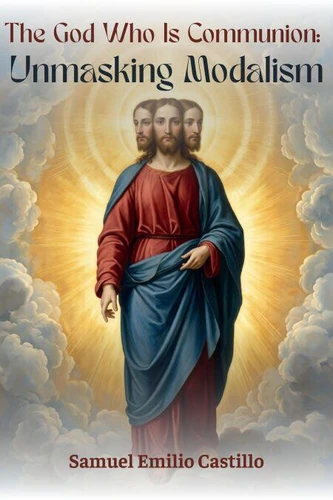
The God Who Is Communion: Unmasking Modalism
Par :Formats :
Disponible dans votre compte client Decitre ou Furet du Nord dès validation de votre commande. Le format ePub est :
- Compatible avec une lecture sur My Vivlio (smartphone, tablette, ordinateur)
- Compatible avec une lecture sur liseuses Vivlio
- Pour les liseuses autres que Vivlio, vous devez utiliser le logiciel Adobe Digital Edition. Non compatible avec la lecture sur les liseuses Kindle, Remarkable et Sony
 , qui est-ce ?
Notre partenaire de plateforme de lecture numérique où vous retrouverez l'ensemble de vos ebooks gratuitement
Pour en savoir plus sur nos ebooks, consultez notre aide en ligne ici
C'est si simple ! Lisez votre ebook avec l'app Vivlio sur votre tablette, mobile ou ordinateur :

- FormatePub
- ISBN8233879227
- EAN9798233879227
- Date de parution21/03/2026
- Protection num.pas de protection
- Infos supplémentairesepub
- ÉditeurLinda Balsamo
Résumé
In AD 213, the early Christian writer Tertullian warned that defending God's unity by erasing His internal distinctions ultimately loses both the Father and the Son. That warning strikes at the heart of modalism-an ancient teaching that reduces the Father, Son, and Holy Spirit to mere roles or masks worn by a solitary God. Though rooted in the second century, this error persists today in movements such as Oneness Pentecostalism.
This book traces modalism from its origins with figures like Noetus and Sabellius to its refutation by early defenders such as Tertullian and Hippolytus. It explores the Jewish background of "two powers in heaven, " examines the baptismal formula of the Didache, and considers key Gospel passages-showing that the early church's faith was not a late invention but the recognition of a God who is eternally Father, Son, and Holy Spirit.
Written as a first work by Samuel Emilio Castillo, a theology student from Venezuela, this concise volume offers a clear introduction to one of history's most consequential theological debates.
This book traces modalism from its origins with figures like Noetus and Sabellius to its refutation by early defenders such as Tertullian and Hippolytus. It explores the Jewish background of "two powers in heaven, " examines the baptismal formula of the Didache, and considers key Gospel passages-showing that the early church's faith was not a late invention but the recognition of a God who is eternally Father, Son, and Holy Spirit.
Written as a first work by Samuel Emilio Castillo, a theology student from Venezuela, this concise volume offers a clear introduction to one of history's most consequential theological debates.