SOLDES
Jusqu'à -70% sur une sélection d'articles*

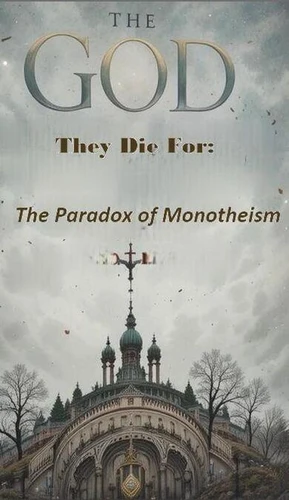
The God They Die For: The Paradox of Monotheism,
Par :Formats :
Disponible dans votre compte client Decitre ou Furet du Nord dès validation de votre commande. Le format ePub est :
- Compatible avec une lecture sur My Vivlio (smartphone, tablette, ordinateur)
- Compatible avec une lecture sur liseuses Vivlio
- Pour les liseuses autres que Vivlio, vous devez utiliser le logiciel Adobe Digital Edition. Non compatible avec la lecture sur les liseuses Kindle, Remarkable et Sony
 , qui est-ce ?
Notre partenaire de plateforme de lecture numérique où vous retrouverez l'ensemble de vos ebooks gratuitement
Pour en savoir plus sur nos ebooks, consultez notre aide en ligne ici
C'est si simple ! Lisez votre ebook avec l'app Vivlio sur votre tablette, mobile ou ordinateur :

- FormatePub
- ISBN8231061617
- EAN9798231061617
- Date de parution28/07/2025
- Protection num.pas de protection
- Infos supplémentairesepub
- ÉditeurWalzone Press
Résumé
The God They Die For: The Paradox of Monotheism is a provocative and necessary examination of how monotheism has shaped moral imagination, divine authority, and human obedience-often with devastating consequences. Rooted in a deep respect for faith but unafraid to question its structures, this book journeys through the theological landscapes of Judaism, Christianity, and Islam to uncover where and how the image of God has been invoked to sanctify violence, suppress dissent, and demand blind submission.
Through five key themes-conscience and speech, blasphemy and heresy, divine silence, protest, and theological reform-the book interrogates how sacred texts and religious institutions have used God to legitimize power rather than compassion. It draws stark contrasts between prophets who were empowered by divine confirmation and those whose authority was claimed but never tested. From Abraham's trust, to Moses' signs, to Jesus' miracles witnessed by thousands-each calling is authenticated.
But the silence around Muhammad's claim, the absence of public signs, and the demand for unquestioned belief raise troubling questions that monotheism has yet to fully address. Yet this is not a work of destruction. It is a work of ethical reclamation. The book dismantles, not to discard faith, but to expose what is false so that what is holy might stand. It calls readers to a conscientious theology-one where God is not used to justify cruelty but to demand justice; not to suppress conscience, but to awaken it.
This is a book for the doubter who still believes, the believer who dares to question, and anyone who has ever stood at the altar of fear and whispered, "Is this who God is?"Let the voice rise. Let the questions come. Let theology be sacred again-not because it controls, but because it sets us free.
Through five key themes-conscience and speech, blasphemy and heresy, divine silence, protest, and theological reform-the book interrogates how sacred texts and religious institutions have used God to legitimize power rather than compassion. It draws stark contrasts between prophets who were empowered by divine confirmation and those whose authority was claimed but never tested. From Abraham's trust, to Moses' signs, to Jesus' miracles witnessed by thousands-each calling is authenticated.
But the silence around Muhammad's claim, the absence of public signs, and the demand for unquestioned belief raise troubling questions that monotheism has yet to fully address. Yet this is not a work of destruction. It is a work of ethical reclamation. The book dismantles, not to discard faith, but to expose what is false so that what is holy might stand. It calls readers to a conscientious theology-one where God is not used to justify cruelty but to demand justice; not to suppress conscience, but to awaken it.
This is a book for the doubter who still believes, the believer who dares to question, and anyone who has ever stood at the altar of fear and whispered, "Is this who God is?"Let the voice rise. Let the questions come. Let theology be sacred again-not because it controls, but because it sets us free.