
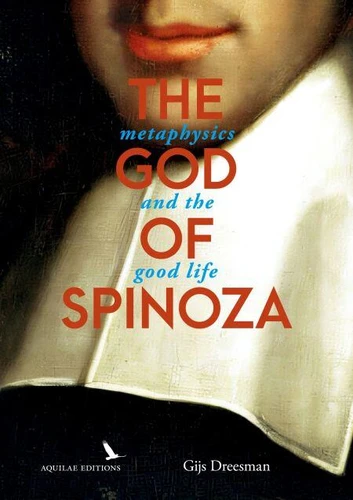
The God of Spinoza. metaphysics and the good life
Par :Formats :
Disponible dans votre compte client Decitre ou Furet du Nord dès validation de votre commande. Le format ePub est :
- Compatible avec une lecture sur My Vivlio (smartphone, tablette, ordinateur)
- Compatible avec une lecture sur liseuses Vivlio
- Pour les liseuses autres que Vivlio, vous devez utiliser le logiciel Adobe Digital Edition. Non compatible avec la lecture sur les liseuses Kindle, Remarkable et Sony
 , qui est-ce ?
Notre partenaire de plateforme de lecture numérique où vous retrouverez l'ensemble de vos ebooks gratuitement
Pour en savoir plus sur nos ebooks, consultez notre aide en ligne ici
C'est si simple ! Lisez votre ebook avec l'app Vivlio sur votre tablette, mobile ou ordinateur :

- Nombre de pages148
- FormatePub
- ISBN978-2-940678-07-5
- EAN9782940678075
- Date de parution13/01/2025
- Protection num.Digital Watermarking
- Taille264 Ko
- Infos supplémentairesepub
- ÉditeurEditions Aquilae
Résumé
In his major work the Ethics, Spinoza offers shrewd advice about how to lead a happier, more stable, and more meaningful life: How do you keep your head cool in times of stress? How to deal with destructive and unstable emotions? What ultimately is of value in life? What precisely is the nature of human happiness? Spinoza embeds his advice in a well-thought-out view about the nature of things, his metaphysics with which he opens the Ethics.
We need, so Spinoza tells us, to have a clear understanding of metaphysics in order to fully grasp what the good life is. This book is about Spinoza's metaphysical claim that God and nature are one and the same. It seeks to make the notoriously difficult opening pages of Spinoza's Ethics accessible to the reader, and it offers a leaner and more easily understandable interpretation of Spinoza's metaphysics.
It does so by contrasting a strong and a weak version of "monism of substance", maintaining that only weak monism, or monism of nature, is duly argued for in Spinoza's text. It is this notion of a whole of nature - which Spinoza may well have taken from the Stoics - that plays a seminal role in his wider philosophy. The study concludes that Spinoza's idea of the good life is best read along Stoic lines.
We need, so Spinoza tells us, to have a clear understanding of metaphysics in order to fully grasp what the good life is. This book is about Spinoza's metaphysical claim that God and nature are one and the same. It seeks to make the notoriously difficult opening pages of Spinoza's Ethics accessible to the reader, and it offers a leaner and more easily understandable interpretation of Spinoza's metaphysics.
It does so by contrasting a strong and a weak version of "monism of substance", maintaining that only weak monism, or monism of nature, is duly argued for in Spinoza's text. It is this notion of a whole of nature - which Spinoza may well have taken from the Stoics - that plays a seminal role in his wider philosophy. The study concludes that Spinoza's idea of the good life is best read along Stoic lines.