SOLDES
Jusqu'à -70% sur une sélection d'articles*

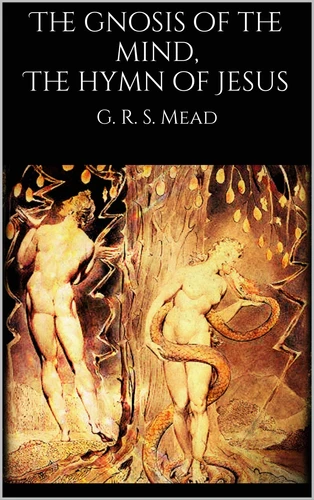
The gnosis of the mind, The hymn of Jesus
Par :Formats :
Disponible dans votre compte client Decitre ou Furet du Nord dès validation de votre commande. Le format ePub est :
- Compatible avec une lecture sur My Vivlio (smartphone, tablette, ordinateur)
- Compatible avec une lecture sur liseuses Vivlio
- Pour les liseuses autres que Vivlio, vous devez utiliser le logiciel Adobe Digital Edition. Non compatible avec la lecture sur les liseuses Kindle, Remarkable et Sony
 , qui est-ce ?
Notre partenaire de plateforme de lecture numérique où vous retrouverez l'ensemble de vos ebooks gratuitement
Pour en savoir plus sur nos ebooks, consultez notre aide en ligne ici
C'est si simple ! Lisez votre ebook avec l'app Vivlio sur votre tablette, mobile ou ordinateur :

- Nombre de pages78
- FormatePub
- ISBN978-3-7481-2874-8
- EAN9783748128748
- Date de parution05/10/2018
- Protection num.Digital Watermarking
- Taille3 Mo
- Infos supplémentairesepub
- ÉditeurBooks on Demand
Résumé
Just as many other settings of the Sayings and Doings of the Lord existed prior to and alongside of the canonical Gospels, so were there, prior to and alongside of the subsequently selected or canonical Acts, many other narratives professing to record the doings and sayings of the Apostles and Disciples of the Lord.
Most of these originated in circles which were subsequently called heretical, and many of them were later on worked over by orthodox editors to suit doctrinal preconceptions, and so preserved for the edification of large numbers in the Catholic or General Church.
As Lipsius says: "Almost every fresh editor of such narratives, using that freedom which all antiquity was wont to allow itself in dealing with literary monuments, would recast the materials which lay before him, excluding whatever might not suit his theological point of view--dogmatic statements, for example, speeches, prayers, etc., for which he would substitute other formulæ of his own composition, and further expanding and abridging after his own pleasure, or as the immediate object which he had in view might dictate."
Some of these edited and re-edited documents, though for the most part they have come down to us in a very fragmentary condition, still preserve distinct traces of their Gnostic origin; and Lipsius has shown that their Gnosticism is not to be ascribed to third century Manichæism, as had been previously assumed by many, but to the general Gnosis of the second century.
A propos de G. R. S. Mead
2,99 €
The Gnostic Crucifixion
E-book
2,99 €

Simon Magus
E-book
2,99 €
2,99 €

Five Years of Theosophy
E-book
2,99 €
The Corpus Hermeticum
E-book
2,99 €