SOLDES
Jusqu'à -70% sur une sélection d'articles*

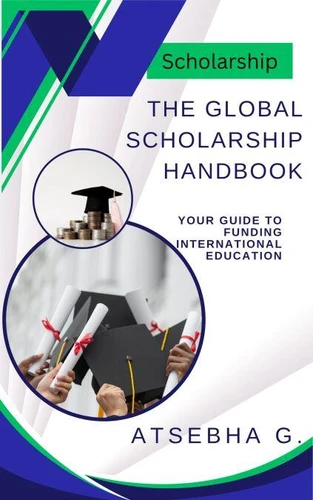
The Global Scholarship Handbook: Your Guide to Funding International Education
Par :Formats :
Disponible dans votre compte client Decitre ou Furet du Nord dès validation de votre commande. Le format ePub est :
- Compatible avec une lecture sur My Vivlio (smartphone, tablette, ordinateur)
- Compatible avec une lecture sur liseuses Vivlio
- Pour les liseuses autres que Vivlio, vous devez utiliser le logiciel Adobe Digital Edition. Non compatible avec la lecture sur les liseuses Kindle, Remarkable et Sony
 , qui est-ce ?
Notre partenaire de plateforme de lecture numérique où vous retrouverez l'ensemble de vos ebooks gratuitement
Pour en savoir plus sur nos ebooks, consultez notre aide en ligne ici
C'est si simple ! Lisez votre ebook avec l'app Vivlio sur votre tablette, mobile ou ordinateur :

- FormatePub
- ISBN8231271115
- EAN9798231271115
- Date de parution04/06/2025
- Protection num.pas de protection
- Infos supplémentairesepub
- ÉditeurWalzone Press
Résumé
Scholarship distribution exhibits notable disparities across different racial and ethnic groups. While a significant percentage of Black students (88%) and American Indian/Alaska Native students (87%) receive grants, compared to White (74%) and Asian (66%) students, the average amount of grant aid can vary. Asian students, for instance, tend to receive a higher average annual amount of grant aid ($13, 840) than other groups.
Merit-based scholarships are often disproportionately awarded to White and Asian students, raising questions about fairness in resource allocation. Conversely, Black and Hispanic students frequently receive fewer merit-based awards, highlighting an ongoing disparity. Efforts are being made to address these inequities through specific programs designed to encourage applications from students of color and women in STEM fields, and educational campaigns to raise awareness about available scholarships.
Overall, only about 12.5% of college students receive any form of scholarship. The competitive nature of these awards means that most scholarship recipients receive less than $2, 500, with only a very small percentage qualifying for larger scholarships or full-ride scholarships. While White students may have a higher success rate in securing scholarships, a significant portion of need-based aid is distributed to minority students.
Many scholarships specifically target students based on their racial or ethnic background, aiming to promote diversity and provide financial assistance to underrepresented groups in higher education.
Merit-based scholarships are often disproportionately awarded to White and Asian students, raising questions about fairness in resource allocation. Conversely, Black and Hispanic students frequently receive fewer merit-based awards, highlighting an ongoing disparity. Efforts are being made to address these inequities through specific programs designed to encourage applications from students of color and women in STEM fields, and educational campaigns to raise awareness about available scholarships.
Overall, only about 12.5% of college students receive any form of scholarship. The competitive nature of these awards means that most scholarship recipients receive less than $2, 500, with only a very small percentage qualifying for larger scholarships or full-ride scholarships. While White students may have a higher success rate in securing scholarships, a significant portion of need-based aid is distributed to minority students.
Many scholarships specifically target students based on their racial or ethnic background, aiming to promote diversity and provide financial assistance to underrepresented groups in higher education.
A propos de Atsebha



The Unbroken Thread
E-book
4,49 €


Youtube for beginners
E-book
8,99 €