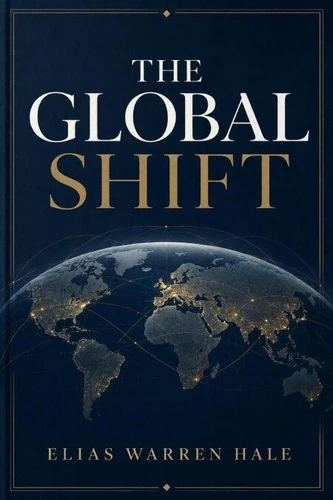
The world order that shaped international affairs for more than seven decades is changing-and the consequences will affect every nation, economy, and citizen. The Global Power Shift: Understanding the New World Disorder offers a clear and wide-ranging examination of the forces transforming global politics in the twenty-first century. As the influence of traditional Western powers declines, emerging nations, regional alliances, multinational corporations, technological platforms, and non-state actors are competing to shape a more fragmented and unpredictable international system.
This book explores the growing rivalry between the United States and China, Russia's challenge to the Western security order, Europe's struggle for strategic independence, India's expanding influence, Africa's demographic and economic potential, and the rise of organizations such as BRICS. It also examines the growing importance of artificial intelligence, cyberwarfare, critical minerals, energy security, global supply chains, economic sanctions, climate change, terrorism, and nuclear deterrence.
The world order that shaped international affairs for more than seven decades is changing-and the consequences will affect every nation, economy, and citizen. The Global Power Shift: Understanding the New World Disorder offers a clear and wide-ranging examination of the forces transforming global politics in the twenty-first century. As the influence of traditional Western powers declines, emerging nations, regional alliances, multinational corporations, technological platforms, and non-state actors are competing to shape a more fragmented and unpredictable international system.
This book explores the growing rivalry between the United States and China, Russia's challenge to the Western security order, Europe's struggle for strategic independence, India's expanding influence, Africa's demographic and economic potential, and the rise of organizations such as BRICS. It also examines the growing importance of artificial intelligence, cyberwarfare, critical minerals, energy security, global supply chains, economic sanctions, climate change, terrorism, and nuclear deterrence.