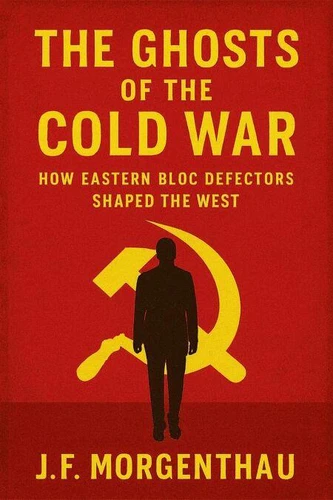
The Ghosts of the Cold War
Par :Formats :
Disponible dans votre compte client Decitre ou Furet du Nord dès validation de votre commande. Le format ePub est :
- Compatible avec une lecture sur My Vivlio (smartphone, tablette, ordinateur)
- Compatible avec une lecture sur liseuses Vivlio
- Pour les liseuses autres que Vivlio, vous devez utiliser le logiciel Adobe Digital Edition. Non compatible avec la lecture sur les liseuses Kindle, Remarkable et Sony
 , qui est-ce ?
Notre partenaire de plateforme de lecture numérique où vous retrouverez l'ensemble de vos ebooks gratuitement
Pour en savoir plus sur nos ebooks, consultez notre aide en ligne ici
C'est si simple ! Lisez votre ebook avec l'app Vivlio sur votre tablette, mobile ou ordinateur :

- FormatePub
- ISBN8232895389
- EAN9798232895389
- Date de parution29/10/2025
- Protection num.pas de protection
- Infos supplémentairesepub
- ÉditeurDraft2Digital
Résumé
The Ghosts of the Cold War: How Eastern Bloc Defectors Shaped the WestThey fled in the dead of night, crossed borders hidden in car trunks, or simply didn't return from international conferences. Thousands of scientists, engineers, and intellectuals escaped from behind the Iron Curtain during the Cold War, bringing with them knowledge that would transform Western science, technology, and culture. Yet their stories and their profound impact on how the Cold War was won have been largely forgotten.
The Ghosts of the Cold War reveals the hidden history of scientific defection from the Soviet Union and Eastern Europe between 1945 and 1991. Unlike books focused on famous spies or political dissidents, this groundbreaking work centers on the scientists and intellectuals whose contributions were technical and cultural rather than purely intelligence-related, uncovering a dimension of Cold War history that has remained invisible for decades.
Drawing on declassified CIA documents, personal interviews with defectors and their families, and extensive archival research, this book traces the exodus from its origins in the post-World War II scramble for Nazi scientists through the dramatic escapes of the 1960s and 1970s, to the massive emigration wave during glasnost that ultimately helped precipitate Soviet collapse. But The Ghosts of the Cold War goes beyond historical narrative to address urgent contemporary questions.
As scientists today flee authoritarian regimes in China, Iran, and Putin's Russia, the Cold War experience offers crucial lessons about brain drain, the relationship between freedom and scientific excellence, and what democratic societies owe those who choose truth over power.
The Ghosts of the Cold War reveals the hidden history of scientific defection from the Soviet Union and Eastern Europe between 1945 and 1991. Unlike books focused on famous spies or political dissidents, this groundbreaking work centers on the scientists and intellectuals whose contributions were technical and cultural rather than purely intelligence-related, uncovering a dimension of Cold War history that has remained invisible for decades.
Drawing on declassified CIA documents, personal interviews with defectors and their families, and extensive archival research, this book traces the exodus from its origins in the post-World War II scramble for Nazi scientists through the dramatic escapes of the 1960s and 1970s, to the massive emigration wave during glasnost that ultimately helped precipitate Soviet collapse. But The Ghosts of the Cold War goes beyond historical narrative to address urgent contemporary questions.
As scientists today flee authoritarian regimes in China, Iran, and Putin's Russia, the Cold War experience offers crucial lessons about brain drain, the relationship between freedom and scientific excellence, and what democratic societies owe those who choose truth over power.