
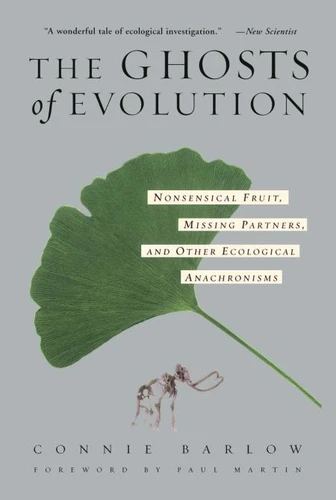
The Ghosts Of Evolution. Nonsensical Fruit, Missing Partners, and Other Ecological Anachronisms
Par :Formats :
Disponible dans votre compte client Decitre ou Furet du Nord dès validation de votre commande. Le format ePub protégé est :
- Compatible avec une lecture sur My Vivlio (smartphone, tablette, ordinateur)
- Compatible avec une lecture sur liseuses Vivlio
- Pour les liseuses autres que Vivlio, vous devez utiliser le logiciel Adobe Digital Edition. Non compatible avec la lecture sur les liseuses Kindle, Remarkable et Sony
- Non compatible avec un achat hors France métropolitaine
 , qui est-ce ?
Notre partenaire de plateforme de lecture numérique où vous retrouverez l'ensemble de vos ebooks gratuitement
Pour en savoir plus sur nos ebooks, consultez notre aide en ligne ici
C'est si simple ! Lisez votre ebook avec l'app Vivlio sur votre tablette, mobile ou ordinateur :

- Nombre de pages352
- FormatePub
- ISBN978-0-7867-2489-5
- EAN9780786724895
- Date de parution04/08/2008
- Protection num.Adobe DRM
- Infos supplémentairesepub
- ÉditeurBasic Books
Résumé
A new vision is sweeping through ecological science: The dense web of dependencies that makes up an ecosystem has gained an added dimension-the dimension of time. Every field, forest, and park is full of living organisms adapted for relationships with creatures that are now extinct. In a vivid narrative, Connie Barlow shows how the idea of "missing partners" in nature evolved from isolated, curious examples into an idea that is transforming how ecologists understand the entire flora and fauna of the Americas.
This fascinating book will enrich and deepen the experience of anyone who enjoys a stroll through the woods or even down an urban sidewalk. But this knowledge has a dark side too: Barlow's "ghost stories" teach us that the ripples of biodiversity loss around us now are just the leading edge of what may well become perilous cascades of extinction.
This fascinating book will enrich and deepen the experience of anyone who enjoys a stroll through the woods or even down an urban sidewalk. But this knowledge has a dark side too: Barlow's "ghost stories" teach us that the ripples of biodiversity loss around us now are just the leading edge of what may well become perilous cascades of extinction.