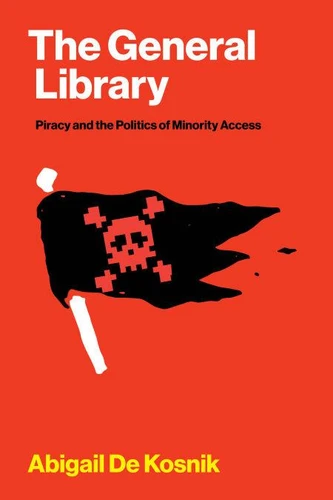
The General Library. Piracy and the Politics of Minority Access
Par :Formats :
Disponible dans votre compte client Decitre ou Furet du Nord dès validation de votre commande. Le format ePub protégé est :
- Compatible avec une lecture sur My Vivlio (smartphone, tablette, ordinateur)
- Compatible avec une lecture sur liseuses Vivlio
- Pour les liseuses autres que Vivlio, vous devez utiliser le logiciel Adobe Digital Edition. Non compatible avec la lecture sur les liseuses Kindle, Remarkable et Sony
- Non compatible avec un achat hors France métropolitaine
 , qui est-ce ?
Notre partenaire de plateforme de lecture numérique où vous retrouverez l'ensemble de vos ebooks gratuitement
Pour en savoir plus sur nos ebooks, consultez notre aide en ligne ici
C'est si simple ! Lisez votre ebook avec l'app Vivlio sur votre tablette, mobile ou ordinateur :

- Nombre de pages246
- Date de parution17/11/2026
- FormatePub
- ISBN978-0-262-05709-7
- EAN9780262057097
- Protection num.Adobe DRM
- Infos supplémentairesepub
- ÉditeurThe MIT Press
Résumé
A bold argument for piracy as a system of knowledge sharing, cultural preservation, and political resistance. What if copying and sharing media, acts frequently labeled as "piracy, " were understood as part of a vast cultural infrastructure that sustains knowledge? The General Library dismantles the myth that piracy is theft, demonstrating how unauthorized modes of distribution and access can act as techniques for cultural preservation, political expression, and everyday resistance.
Rather than reinforcing the industry narrative that piracy drains resources, Abigail De Kosnik argues that unauthorized access provides essential pathways to learning, belonging, and survival-particularly for marginalized communities often excluded from official channels. Drawing on in-depth oral history interviews with media users who identify as fans, pirates, and intensive consumers, De Kosnik traces how Black, brown, queer, disabled, and poor communities use illicit access to explore identity, build communities of care, and imagine futures otherwise rendered inaccessible by technocapitalism.
She also examines how definitions of piracy are shifting with the rise of AI, as corporations scrape copyrighted works to train LLMs-an example of illicit copying on a massive scale that dwarfs any act of appropriation committed by individual consumers.
Rather than reinforcing the industry narrative that piracy drains resources, Abigail De Kosnik argues that unauthorized access provides essential pathways to learning, belonging, and survival-particularly for marginalized communities often excluded from official channels. Drawing on in-depth oral history interviews with media users who identify as fans, pirates, and intensive consumers, De Kosnik traces how Black, brown, queer, disabled, and poor communities use illicit access to explore identity, build communities of care, and imagine futures otherwise rendered inaccessible by technocapitalism.
She also examines how definitions of piracy are shifting with the rise of AI, as corporations scrape copyrighted works to train LLMs-an example of illicit copying on a massive scale that dwarfs any act of appropriation committed by individual consumers.