SOLDES
Jusqu'à -70% sur une sélection d'articles*

Nouveauté
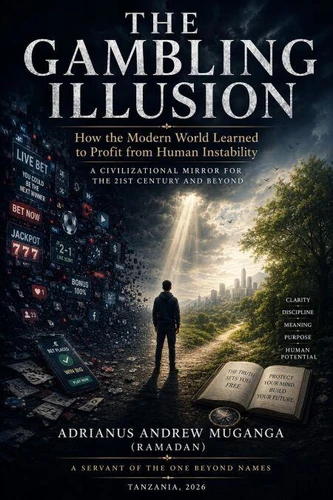
The Gambling Illusion: How the Modern World Learned to Profit from Human Instability. 36, #36
Par :Formats :
Disponible dans votre compte client Decitre ou Furet du Nord dès validation de votre commande. Le format ePub est :
- Compatible avec une lecture sur My Vivlio (smartphone, tablette, ordinateur)
- Compatible avec une lecture sur liseuses Vivlio
- Pour les liseuses autres que Vivlio, vous devez utiliser le logiciel Adobe Digital Edition. Non compatible avec la lecture sur les liseuses Kindle, Remarkable et Sony
 , qui est-ce ?
Notre partenaire de plateforme de lecture numérique où vous retrouverez l'ensemble de vos ebooks gratuitement
Pour en savoir plus sur nos ebooks, consultez notre aide en ligne ici
C'est si simple ! Lisez votre ebook avec l'app Vivlio sur votre tablette, mobile ou ordinateur :

- FormatePub
- ISBN978-1-105-31472-8
- EAN9781105314728
- Date de parution13/05/2026
- Protection num.pas de protection
- Infos supplémentairesepub
- ÉditeurLulu.com
Résumé
THE GAMBLING ILLUSION: How the Modern World Learned to Profit from Human Instability is a powerful examination of how gambling evolved from an isolated activity into a continuously accessible digital system embedded within modern technological life. The book argues that gambling is no longer only about entertainment or personal choice, but part of a larger attention economy built around emotional stimulation, uncertainty, behavioral reinforcement, and continuous engagement.
Drawing from history, psychology, neuroscience, education, youth development, and social observation, the work explores how smartphones, algorithmic systems, sports betting platforms, and digital environments increasingly interact with human vulnerability, attention, hope, and emotional instability. It examines how continuous stimulation may gradually influence concentration, patience, emotional regulation, long-term thinking, and developmental stability across modern societies.
Special attention is given to youth populations and developing societies experiencing rapid smartphone expansion, economic uncertainty, unemployment pressure, and rising digital gambling exposure. The book argues that the future strength of nations depends not only on economics or technology, but also on the psychological condition of the generations preparing to inherit them. Written in a calm, evidence-centered, and observational tone, this work approaches gambling as a broader civilizational issue connected to human potential, digital culture, social transformation, and the future of human development in the twenty-first century.
Drawing from history, psychology, neuroscience, education, youth development, and social observation, the work explores how smartphones, algorithmic systems, sports betting platforms, and digital environments increasingly interact with human vulnerability, attention, hope, and emotional instability. It examines how continuous stimulation may gradually influence concentration, patience, emotional regulation, long-term thinking, and developmental stability across modern societies.
Special attention is given to youth populations and developing societies experiencing rapid smartphone expansion, economic uncertainty, unemployment pressure, and rising digital gambling exposure. The book argues that the future strength of nations depends not only on economics or technology, but also on the psychological condition of the generations preparing to inherit them. Written in a calm, evidence-centered, and observational tone, this work approaches gambling as a broader civilizational issue connected to human potential, digital culture, social transformation, and the future of human development in the twenty-first century.
A propos de Adrianus Muganga


0,99 €


0,99 €



0,99 €