
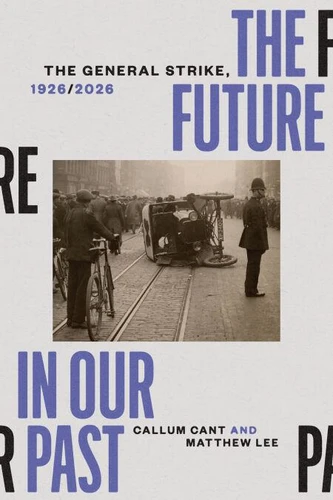
The Future in our Past. The General Strike, 1926/2026
Par : ,Formats :
Actuellement indisponible
Cet article est actuellement indisponible, il ne peut pas être commandé sur notre site pour le moment. Nous vous invitons à vous inscrire à l'alerte disponibilité, vous recevrez un e-mail dès que cet ouvrage sera à nouveau disponible.
Disponible dans votre compte client Decitre ou Furet du Nord dès validation de votre commande. Le format ePub protégé est :
- Compatible avec une lecture sur My Vivlio (smartphone, tablette, ordinateur)
- Compatible avec une lecture sur liseuses Vivlio
- Pour les liseuses autres que Vivlio, vous devez utiliser le logiciel Adobe Digital Edition. Non compatible avec la lecture sur les liseuses Kindle, Remarkable et Sony
- Non compatible avec un achat hors France métropolitaine
 , qui est-ce ?
Notre partenaire de plateforme de lecture numérique où vous retrouverez l'ensemble de vos ebooks gratuitement
Pour en savoir plus sur nos ebooks, consultez notre aide en ligne ici
C'est si simple ! Lisez votre ebook avec l'app Vivlio sur votre tablette, mobile ou ordinateur :

- Nombre de pages144
- FormatePub
- ISBN978-1-83674-263-0
- EAN9781836742630
- Date de parution23/06/2026
- Protection num.Adobe DRM
- Infos supplémentairesepub
- ÉditeurVerso
Résumé
A fresh, accessible history of the 1926 General Strike on its centenary - telling a story of working-class community then and now. The Future in Our Past tells the remarkable story of Britain's only ever General Strike on its centenary. It is an on-the-ground account of how workers brought the country to a standstill for nine extraordinary days. Callum Cant and Matthew Lee take us on a journey through a Britain living on its nerves, from the London docklands to the South Wales coalfields and the railways and warehouses of middle England.
They compare the struggles of 1926 with those of workers in these same communities today. We meet a Bangladeshi courier involved in wildcat strikes on the Isle of Dogs. The great grandson of a Welsh miner facing redundancy at the blast furnaces of Port Talbot. This is social history at its most immediate and relevant. Churchill feared that labour militancy presaged a Bolshevik-style revolution. But for socialists, dreams of a brighter future would have to wait.
Cant and Matthew Lee ask why this monumental standoff ended in defeat for the unions despite their huge mobilisation. They set out why the General Strike still matters and the lessons it has f
They compare the struggles of 1926 with those of workers in these same communities today. We meet a Bangladeshi courier involved in wildcat strikes on the Isle of Dogs. The great grandson of a Welsh miner facing redundancy at the blast furnaces of Port Talbot. This is social history at its most immediate and relevant. Churchill feared that labour militancy presaged a Bolshevik-style revolution. But for socialists, dreams of a brighter future would have to wait.
Cant and Matthew Lee ask why this monumental standoff ended in defeat for the unions despite their huge mobilisation. They set out why the General Strike still matters and the lessons it has f
A fresh, accessible history of the 1926 General Strike on its centenary - telling a story of working-class community then and now. The Future in Our Past tells the remarkable story of Britain's only ever General Strike on its centenary. It is an on-the-ground account of how workers brought the country to a standstill for nine extraordinary days. Callum Cant and Matthew Lee take us on a journey through a Britain living on its nerves, from the London docklands to the South Wales coalfields and the railways and warehouses of middle England.
They compare the struggles of 1926 with those of workers in these same communities today. We meet a Bangladeshi courier involved in wildcat strikes on the Isle of Dogs. The great grandson of a Welsh miner facing redundancy at the blast furnaces of Port Talbot. This is social history at its most immediate and relevant. Churchill feared that labour militancy presaged a Bolshevik-style revolution. But for socialists, dreams of a brighter future would have to wait.
Cant and Matthew Lee ask why this monumental standoff ended in defeat for the unions despite their huge mobilisation. They set out why the General Strike still matters and the lessons it has f
They compare the struggles of 1926 with those of workers in these same communities today. We meet a Bangladeshi courier involved in wildcat strikes on the Isle of Dogs. The great grandson of a Welsh miner facing redundancy at the blast furnaces of Port Talbot. This is social history at its most immediate and relevant. Churchill feared that labour militancy presaged a Bolshevik-style revolution. But for socialists, dreams of a brighter future would have to wait.
Cant and Matthew Lee ask why this monumental standoff ended in defeat for the unions despite their huge mobilisation. They set out why the General Strike still matters and the lessons it has f
