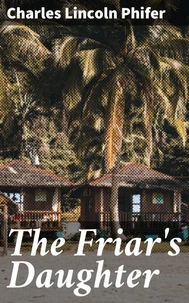
The Friar's Daughter. A Story of the American Occupation of the Philippines
Par :Formats :
Disponible dans votre compte client Decitre ou Furet du Nord dès validation de votre commande. Le format ePub est :
- Compatible avec une lecture sur My Vivlio (smartphone, tablette, ordinateur)
- Compatible avec une lecture sur liseuses Vivlio
- Pour les liseuses autres que Vivlio, vous devez utiliser le logiciel Adobe Digital Edition. Non compatible avec la lecture sur les liseuses Kindle, Remarkable et Sony
 , qui est-ce ?
Notre partenaire de plateforme de lecture numérique où vous retrouverez l'ensemble de vos ebooks gratuitement
Pour en savoir plus sur nos ebooks, consultez notre aide en ligne ici
C'est si simple ! Lisez votre ebook avec l'app Vivlio sur votre tablette, mobile ou ordinateur :

- Nombre de pages69
- FormatePub
- ISBN859-65--4704306-5
- EAN8596547043065
- Date de parution03/06/2022
- Protection num.Digital Watermarking
- Taille683 Ko
- Infos supplémentairesepub
- ÉditeurDIGICAT
Résumé
In "The Friar's Daughter, " Charles Lincoln Phifer weaves a captivating narrative that intricately explores themes of faith, identity, and societal constraints within a richly depicited medieval setting. Through a blend of lyrical prose and vivid imagery, Phifer invites readers to immerse themselves in the life of the titular character, a young woman grappling with the duality of her upbringing as the daughter of a pious friar and her quest for autonomy in an oppressive patriarchal society.
The novel's literary context reflects a nuanced understanding of the historical tensions between personal desire and religious obligations, positioning it within the broader canon of feminist medieval literature. Phifer's own background as an academic in religious studies has profoundly shaped his narrative approach, prompting him to explore the intersections of spirituality and personal rebellion.
With a deep fascination for the historical intricacies of medieval life, Phifer draws upon extensive research and personal reflection to breathe life into his characters, making them both relatable and complex. His previous works exemplify a commitment to portraying the struggles of marginalized voices, particularly women, within the frameworks of tradition and faith. I highly recommend "The Friar's Daughter" to readers seeking a thought-provoking exploration of individual agency in the face of social constraints.
Phifer's deft storytelling and rich character development offer both entertainment and insight, making it a valuable addition to any literary collection. Whether you're a fan of historical fiction or a scholar interested in the interplay of gender and religion, this novel promises to resonate long after the final page is turned.
The novel's literary context reflects a nuanced understanding of the historical tensions between personal desire and religious obligations, positioning it within the broader canon of feminist medieval literature. Phifer's own background as an academic in religious studies has profoundly shaped his narrative approach, prompting him to explore the intersections of spirituality and personal rebellion.
With a deep fascination for the historical intricacies of medieval life, Phifer draws upon extensive research and personal reflection to breathe life into his characters, making them both relatable and complex. His previous works exemplify a commitment to portraying the struggles of marginalized voices, particularly women, within the frameworks of tradition and faith. I highly recommend "The Friar's Daughter" to readers seeking a thought-provoking exploration of individual agency in the face of social constraints.
Phifer's deft storytelling and rich character development offer both entertainment and insight, making it a valuable addition to any literary collection. Whether you're a fan of historical fiction or a scholar interested in the interplay of gender and religion, this novel promises to resonate long after the final page is turned.