SOLDES
Jusqu'à -70% sur une sélection d'articles*

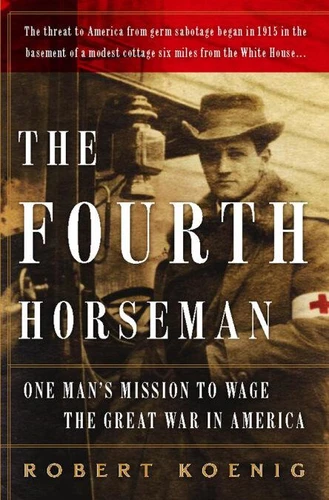
The Fourth Horseman
Par :Formats :
Disponible dans votre compte client Decitre ou Furet du Nord dès validation de votre commande. Le format ePub protégé est :
- Compatible avec une lecture sur My Vivlio (smartphone, tablette, ordinateur)
- Compatible avec une lecture sur liseuses Vivlio
- Pour les liseuses autres que Vivlio, vous devez utiliser le logiciel Adobe Digital Edition. Non compatible avec la lecture sur les liseuses Kindle, Remarkable et Sony
- Non compatible avec un achat hors France métropolitaine
 , qui est-ce ?
Notre partenaire de plateforme de lecture numérique où vous retrouverez l'ensemble de vos ebooks gratuitement
Pour en savoir plus sur nos ebooks, consultez notre aide en ligne ici
C'est si simple ! Lisez votre ebook avec l'app Vivlio sur votre tablette, mobile ou ordinateur :

- Nombre de pages304
- FormatePub
- ISBN978-0-7867-3432-0
- EAN9780786734320
- Date de parution28/04/2009
- Protection num.Adobe DRM
- Infos supplémentairesepub
- ÉditeurPublicAffairs
Résumé
The story of Anton Dilger brings to life a missing chapter in U. S. history and shows, dramatically, that the Great European War was in fact being fought on the home front years before we formally joined it. The doctor who grew anthrax and other bacteria in that rented house was an American -- the son of a Medal of Honor winner who fought at Gettysburg -- on a secret mission, for the German Army in 1915.
The Fourth Horseman tells the startling story of that mission led by a brilliant but conflicted surgeon who became one of Germany's most daring spies and saboteurs during World War I and who not only pioneered biowarfare in his native land but also lead a last-ditch German effort to goad Mexico into invading the United States. It is a story of mysterious missions, divided loyalties, and a new and terrible kind of warfare that emerged as America -- in spite of fierce dissention at home -- was making the decision to send its Doughboys to the Great War in Europe.
This story has never been told before in full. And Dilger is a fascinating analog for our own troubled times. Having thrown off the tethers of obligation to family and country, he became a very dangerous man indeed: A spy, a saboteur, and a zealot to a degree that may have so embarrassed the German High Command that, after the war, they ordered his death rather than admit that he worked for them.
The Fourth Horseman tells the startling story of that mission led by a brilliant but conflicted surgeon who became one of Germany's most daring spies and saboteurs during World War I and who not only pioneered biowarfare in his native land but also lead a last-ditch German effort to goad Mexico into invading the United States. It is a story of mysterious missions, divided loyalties, and a new and terrible kind of warfare that emerged as America -- in spite of fierce dissention at home -- was making the decision to send its Doughboys to the Great War in Europe.
This story has never been told before in full. And Dilger is a fascinating analog for our own troubled times. Having thrown off the tethers of obligation to family and country, he became a very dangerous man indeed: A spy, a saboteur, and a zealot to a degree that may have so embarrassed the German High Command that, after the war, they ordered his death rather than admit that he worked for them.