SOLDES
Jusqu'à -70% sur une sélection d'articles*

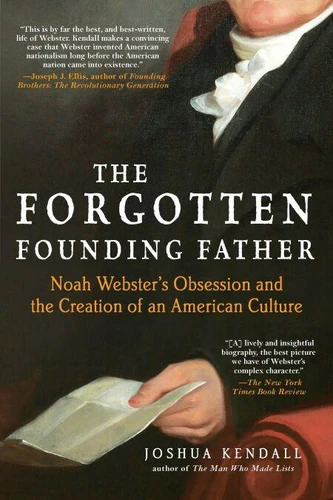
The Forgotten Founding Father. Noah Webster's Obsession and the Creation of an American Culture
Par :Formats :
Disponible dans votre compte client Decitre ou Furet du Nord dès validation de votre commande. Le format ePub protégé est :
- Compatible avec une lecture sur My Vivlio (smartphone, tablette, ordinateur)
- Compatible avec une lecture sur liseuses Vivlio
- Pour les liseuses autres que Vivlio, vous devez utiliser le logiciel Adobe Digital Edition. Non compatible avec la lecture sur les liseuses Kindle, Remarkable et Sony
- Non compatible avec un achat hors France métropolitaine
 , qui est-ce ?
Notre partenaire de plateforme de lecture numérique où vous retrouverez l'ensemble de vos ebooks gratuitement
Pour en savoir plus sur nos ebooks, consultez notre aide en ligne ici
C'est si simple ! Lisez votre ebook avec l'app Vivlio sur votre tablette, mobile ou ordinateur :

- Nombre de pages416
- FormatePub
- ISBN978-1-101-48654-2
- EAN9781101486542
- Date de parution14/04/2011
- Protection num.Adobe DRM
- Taille3 Mo
- Infos supplémentairesepub
- ÉditeurBerkley
Résumé
Noah Webster's name is now synonymous with the dictionary he created, but his story is not nearly so ubiquitous. Now acclaimed author of The Man Who Made Lists, Joshua Kendall sheds new light on Webster's life, and his far-reaching influence in establishing the American nation. Webster hobnobbed with various Founding Fathers and was a young confidant of George Washington and Ben Franklin. He started New York's first daily newspaper, predating Alexander Hamilton's New York Post.
His "blue-backed speller" for schoolchildren sold millions of copies and influenced early copyright law. But perhaps most important, Webster was an ardent supporter of a unified, definitively American culture, distinct from the British, at a time when the United States of America were anything but unified-and his dictionary of American English is a testament to that.
His "blue-backed speller" for schoolchildren sold millions of copies and influenced early copyright law. But perhaps most important, Webster was an ardent supporter of a unified, definitively American culture, distinct from the British, at a time when the United States of America were anything but unified-and his dictionary of American English is a testament to that.