SOLDES
Jusqu'à -70% sur une sélection d'articles*

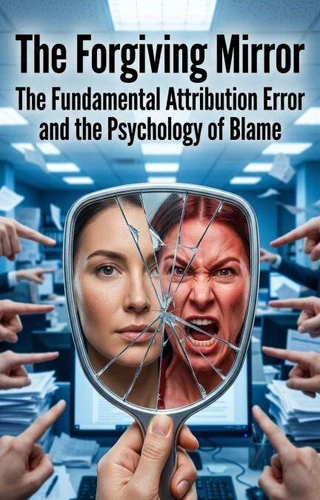
The Forgiving Mirror. The Fundamental Attribution Error and the Psychology of Blame
Par :Formats :
Disponible dans votre compte client Decitre ou Furet du Nord dès validation de votre commande. Le format ePub est :
- Compatible avec une lecture sur My Vivlio (smartphone, tablette, ordinateur)
- Compatible avec une lecture sur liseuses Vivlio
- Pour les liseuses autres que Vivlio, vous devez utiliser le logiciel Adobe Digital Edition. Non compatible avec la lecture sur les liseuses Kindle, Remarkable et Sony
 , qui est-ce ?
Notre partenaire de plateforme de lecture numérique où vous retrouverez l'ensemble de vos ebooks gratuitement
Pour en savoir plus sur nos ebooks, consultez notre aide en ligne ici
C'est si simple ! Lisez votre ebook avec l'app Vivlio sur votre tablette, mobile ou ordinateur :

- Nombre de pages199
- FormatePub
- ISBN978-3-565-30344-1
- EAN9783565303441
- Date de parution08/03/2026
- Protection num.pas de protection
- Taille690 Ko
- Infos supplémentairesepub
- ÉditeurEmphaloz Publishing House
Résumé
When a colleague snaps at you during a meeting, you assume they are a naturally aggressive, difficult person. But when you snap at someone later that same day, you blame it on a bad night's sleep or a stressful commute. We judge others by their character, but we excuse ourselves by our context.
This cognitive blind spot is known as the Fundamental Attribution Error, and it is the root cause of countless ruined relationships, toxic workplaces, and geopolitical conflicts.
This book explores the mental shortcuts our brains take to make sense of the world, revealing why we are biologically wired to assume the worst in strangers while granting ourselves infinite grace. Through compelling behavioral studies, we analyze how this bias corrupts jury verdicts, performance reviews, and daily arguments. More importantly, we provide psychological tools to build cognitive empathy, allowing you to force your brain to see the invisible pressures acting on the people around you. Break the cycle of unfair judgment.
Learn to view human behavior through a lens of extreme context and fundamentally transform how you interact with the world.
This book explores the mental shortcuts our brains take to make sense of the world, revealing why we are biologically wired to assume the worst in strangers while granting ourselves infinite grace. Through compelling behavioral studies, we analyze how this bias corrupts jury verdicts, performance reviews, and daily arguments. More importantly, we provide psychological tools to build cognitive empathy, allowing you to force your brain to see the invisible pressures acting on the people around you. Break the cycle of unfair judgment.
Learn to view human behavior through a lens of extreme context and fundamentally transform how you interact with the world.