SOLDES
Jusqu'à -70% sur une sélection d'articles*

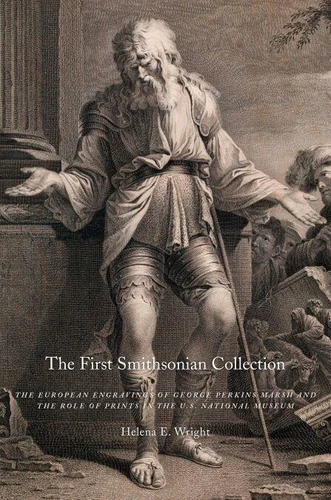
The First Smithsonian Collection. The European Engravings of George Perkins Marsh and the Role of Prints in the U.S. National Museum
Par :Formats :
Disponible dans votre compte client Decitre ou Furet du Nord dès validation de votre commande. Le format ePub protégé est :
- Compatible avec une lecture sur My Vivlio (smartphone, tablette, ordinateur)
- Compatible avec une lecture sur liseuses Vivlio
- Pour les liseuses autres que Vivlio, vous devez utiliser le logiciel Adobe Digital Edition. Non compatible avec la lecture sur les liseuses Kindle, Remarkable et Sony
- Non compatible avec un achat hors France métropolitaine
 , qui est-ce ?
Notre partenaire de plateforme de lecture numérique où vous retrouverez l'ensemble de vos ebooks gratuitement
Pour en savoir plus sur nos ebooks, consultez notre aide en ligne ici
C'est si simple ! Lisez votre ebook avec l'app Vivlio sur votre tablette, mobile ou ordinateur :

- Nombre de pages313
- FormatePub
- ISBN978-1-935623-63-2
- EAN9781935623632
- Date de parution28/04/2015
- Protection num.Adobe DRM
- Taille7 Mo
- Infos supplémentairesepub
- ÉditeurSmithsonian Institution Scholarl...
Résumé
Outstanding Academic Title, Choice, 2015 Winner, Ewell Newman Award of the American Historical Print Collectors Society, 2016In 1849 the Smithsonian purchased the Marsh Collection of European engravings. Not only the first collection of any kind to be acquired by the new Institution, it was also the first public print collection in the nation, and it presented an important symbol of cultural authority.
The prints formed part of the library of Vermont Congressman George Perkins Marsh (1801-1882), a member of the Smithsonian's Board of Regents. The uncertainty of the Smithsonian's mission in the early years complicated its motivation for purchasing the collection, especially given Marsh's position as a Regent in financial difficulty. After a serious fire in 1865, portions of the collection were deposited at the Library of Congress and the Corcoran Gallery of Art.
Efforts to reclaim it began in the 1880s, as a new generation of Smithsonian staff expanded the National Museum, but they achieved only mixed success. Through the story of the Marsh Collection, the book explores the cultural values attributed to prints in the 19th century, including their prominent role in expositions and their influence on visual culture at a time when collecting styles were moving from an individual's private contemplation of artworks to wider public venues of exposition in museums and reception by multiple audiences.
The history of this first Smithsonian collection enlivens an important stage in the development of American cultural identity and in the formation of the Smithsonian as a national institution.
The prints formed part of the library of Vermont Congressman George Perkins Marsh (1801-1882), a member of the Smithsonian's Board of Regents. The uncertainty of the Smithsonian's mission in the early years complicated its motivation for purchasing the collection, especially given Marsh's position as a Regent in financial difficulty. After a serious fire in 1865, portions of the collection were deposited at the Library of Congress and the Corcoran Gallery of Art.
Efforts to reclaim it began in the 1880s, as a new generation of Smithsonian staff expanded the National Museum, but they achieved only mixed success. Through the story of the Marsh Collection, the book explores the cultural values attributed to prints in the 19th century, including their prominent role in expositions and their influence on visual culture at a time when collecting styles were moving from an individual's private contemplation of artworks to wider public venues of exposition in museums and reception by multiple audiences.
The history of this first Smithsonian collection enlivens an important stage in the development of American cultural identity and in the formation of the Smithsonian as a national institution.