SOLDES
Jusqu'à -70% sur une sélection d'articles*

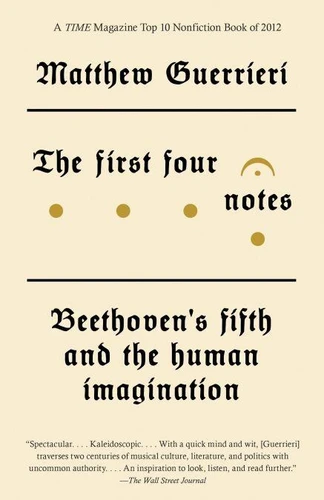
The First Four Notes. Beethoven's Fifth and the Human Imagination
Par :Formats :
Disponible dans votre compte client Decitre ou Furet du Nord dès validation de votre commande. Le format ePub protégé est :
- Compatible avec une lecture sur My Vivlio (smartphone, tablette, ordinateur)
- Compatible avec une lecture sur liseuses Vivlio
- Pour les liseuses autres que Vivlio, vous devez utiliser le logiciel Adobe Digital Edition. Non compatible avec la lecture sur les liseuses Kindle, Remarkable et Sony
- Non compatible avec un achat hors France métropolitaine
 , qui est-ce ?
Notre partenaire de plateforme de lecture numérique où vous retrouverez l'ensemble de vos ebooks gratuitement
Pour en savoir plus sur nos ebooks, consultez notre aide en ligne ici
C'est si simple ! Lisez votre ebook avec l'app Vivlio sur votre tablette, mobile ou ordinateur :

- Nombre de pages384
- FormatePub
- ISBN978-0-307-96092-4
- EAN9780307960924
- Date de parution13/11/2012
- Protection num.Adobe DRM
- Taille2 Mo
- Infos supplémentairesepub
- ÉditeurVintage
Résumé
A TIME Magazine Top 10 Nonfiction Book of 2012A New Yorker Best Book of the YearLos Angeles Magazine's #1 Music Book of the YearA unique and revelatory book of music history that examines in great depth what is perhaps the best-known and most-popular symphony ever written and its four-note opening, which has fascinated musicians, historians, and philosophers for the last two hundred years. Music critic Matthew Guerrieri reaches back before Beethoven's time to examine what might have influenced him in writing his Fifth Symphony, and forward into our own time to describe the ways in which the Fifth has, in turn, asserted its influence.
He uncovers possible sources for the famous opening notes in the rhythms of ancient Greek poetry and certain French Revolutionary songs and symphonies. Guerrieri confirms that, contrary to popular belief, Beethoven was not deaf when he wrote the Fifth. He traces the Fifth's influence in China, Russia, and the United States (Emerson and Thoreau were passionate fans) and shows how the masterpiece was used by both the Allies and the Nazis in World War II.
Altogether, a fascinating piece of musical detective work-a treat for music lovers of every stripe.
He uncovers possible sources for the famous opening notes in the rhythms of ancient Greek poetry and certain French Revolutionary songs and symphonies. Guerrieri confirms that, contrary to popular belief, Beethoven was not deaf when he wrote the Fifth. He traces the Fifth's influence in China, Russia, and the United States (Emerson and Thoreau were passionate fans) and shows how the masterpiece was used by both the Allies and the Nazis in World War II.
Altogether, a fascinating piece of musical detective work-a treat for music lovers of every stripe.