OFFRE LISEUSES
Une liseuse achetée = une housse offerte* jusqu'au 21 juin

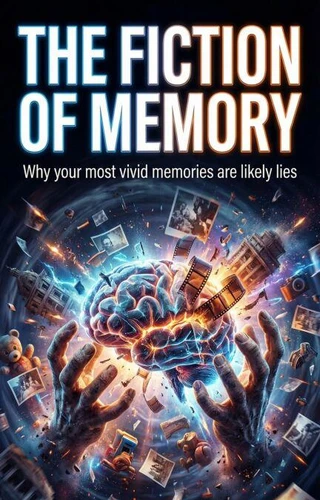
The Fiction of Memory. Why your most vivid memories are likely lies
Par :Formats :
Disponible dans votre compte client Decitre ou Furet du Nord dès validation de votre commande. Le format ePub est :
- Compatible avec une lecture sur My Vivlio (smartphone, tablette, ordinateur)
- Compatible avec une lecture sur liseuses Vivlio
- Pour les liseuses autres que Vivlio, vous devez utiliser le logiciel Adobe Digital Edition. Non compatible avec la lecture sur les liseuses Kindle, Remarkable et Sony
 , qui est-ce ?
Notre partenaire de plateforme de lecture numérique où vous retrouverez l'ensemble de vos ebooks gratuitement
Pour en savoir plus sur nos ebooks, consultez notre aide en ligne ici
C'est si simple ! Lisez votre ebook avec l'app Vivlio sur votre tablette, mobile ou ordinateur :

- Nombre de pages182
- FormatePub
- ISBN978-3-565-20245-4
- EAN9783565202454
- Date de parution28/01/2026
- Protection num.pas de protection
- Taille570 Ko
- Infos supplémentairesepub
- ÉditeurEmphaloz Publishing House
Résumé
"The Fiction of Memory - Why your most vivid memories are likely lies" shatters the metaphor of the brain as a video camera. We believe that when we remember, we are playing back a file. In reality, we are rewriting a story. Every time we recall a memory, we alter it, adding details that weren't there and removing ones that were.
Science writer David Loft explores the groundbreaking work of psychologist Elizabeth Loftus.
The book details the "Lost in the Mall" experiment, where researchers successfully implanted false childhood memories in adults. It examines the terrifying implications for the justice system, showing how eyewitness testimony can be manipulated by a single leading question. "The Fiction of Memory" teaches readers to be skeptical of their own past. It argues that memory is not a historical record, but a creative act of the present, designed to help us navigate the future, not preserve the truth.
The book details the "Lost in the Mall" experiment, where researchers successfully implanted false childhood memories in adults. It examines the terrifying implications for the justice system, showing how eyewitness testimony can be manipulated by a single leading question. "The Fiction of Memory" teaches readers to be skeptical of their own past. It argues that memory is not a historical record, but a creative act of the present, designed to help us navigate the future, not preserve the truth.