
Hyeok Lim writes narrative nonfiction about failure, responsibility, power, and self-command. The work uses concrete illustrative scenes to examine what people do after a bad result-especially when other people bear part of the cost. The False Verdict is for readers who want practical distinctions without motivational spectacle or easy absolution.
Nouveauté
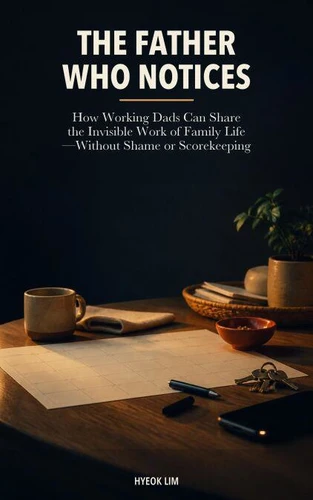
The Father Who Notices
Par :Formats :
Disponible dans votre compte client Decitre ou Furet du Nord dès validation de votre commande. Le format ePub est :
- Compatible avec une lecture sur My Vivlio (smartphone, tablette, ordinateur)
- Compatible avec une lecture sur liseuses Vivlio
- Pour les liseuses autres que Vivlio, vous devez utiliser le logiciel Adobe Digital Edition. Non compatible avec la lecture sur les liseuses Kindle, Remarkable et Sony
 , qui est-ce ?
Notre partenaire de plateforme de lecture numérique où vous retrouverez l'ensemble de vos ebooks gratuitement
Pour en savoir plus sur nos ebooks, consultez notre aide en ligne ici
C'est si simple ! Lisez votre ebook avec l'app Vivlio sur votre tablette, mobile ou ordinateur :

- FormatePub
- ISBN8235378117
- EAN9798235378117
- Date de parution27/08/2026
- Protection num.pas de protection
- Infos supplémentairesepub
- ÉditeurIoakim Ioakim
Résumé
When a father waits to be asked, someone else has usually already noticed, decided, prepared, and remembered. The Father Who Notices is a research-grounded work of practical philosophy for working dads who want to become full partners in family life without shame, mind reading, or scorekeeping. Through three fictional families under pressure, it shows why visible chores are only part of care-and why taking responsibility also requires agreed room to decide.
This is not a demand for perfect prediction or a rigid fifty-fifty split. It is a guide to recognizing the work that begins before a task is assigned and continues after it is done: finding the need, carrying the information, making ordinary decisions, checking the result, and absorbing the cost when plans fail. Hyeok Lim examines what fathers owe before anyone asks, when a partner's standards become control, which family tasks should disappear rather than be redistributed, and how repair can change future choices without purchasing forgiveness.
The result is a clearer way to share attention, authority, consequences, and care.
This is not a demand for perfect prediction or a rigid fifty-fifty split. It is a guide to recognizing the work that begins before a task is assigned and continues after it is done: finding the need, carrying the information, making ordinary decisions, checking the result, and absorbing the cost when plans fail. Hyeok Lim examines what fathers owe before anyone asks, when a partner's standards become control, which family tasks should disappear rather than be redistributed, and how repair can change future choices without purchasing forgiveness.
The result is a clearer way to share attention, authority, consequences, and care.
A propos de Hyeok Lim

6,49 €
The Null Prayer
E-book
6,49 €
No Valid Mandate
E-book
5,49 €
Carrying the Friendship
E-book
6,49 €

6,49 €
What Is Yours to Decide?
E-book
6,49 €
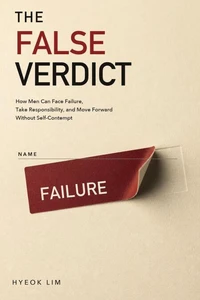
THE FALSE VERDICT
E-book
4,49 €