SOLDES
Jusqu'à -70% sur une sélection d'articles*

Nouveauté
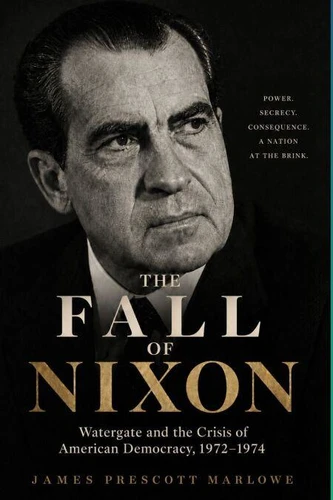
THE FALL OF NIXON. Watergate and the Crisis of American Democracy, 1972-1974
Par :Formats :
Disponible dans votre compte client Decitre ou Furet du Nord dès validation de votre commande. Le format ePub est :
- Compatible avec une lecture sur My Vivlio (smartphone, tablette, ordinateur)
- Compatible avec une lecture sur liseuses Vivlio
- Pour les liseuses autres que Vivlio, vous devez utiliser le logiciel Adobe Digital Edition. Non compatible avec la lecture sur les liseuses Kindle, Remarkable et Sony
 , qui est-ce ?
Notre partenaire de plateforme de lecture numérique où vous retrouverez l'ensemble de vos ebooks gratuitement
Pour en savoir plus sur nos ebooks, consultez notre aide en ligne ici
C'est si simple ! Lisez votre ebook avec l'app Vivlio sur votre tablette, mobile ou ordinateur :

- FormatePub
- ISBN8905168406
- EAN9798905168406
- Date de parution02/06/2026
- Protection num.pas de protection
- Taille768 Ko
- Infos supplémentairesepub
- ÉditeurChiify
Résumé
The complete narrative history of Watergate - Richard Nixon, the cover-up, Deep Throat, impeachment, and the resignation that proved no president is above the law, 1972-1974.
Shortly after midnight on June 17, 1972, security guard Frank Wills found tape covering a door latch in the Watergate complex. He removed it. An hour later, new tape covered the same latch. He called the police. Officers found five men in surgical gloves on the sixth floor of the Democratic National Committee headquarters - carrying $2, 300 in sequentially numbered bills, surveillance equipment, and a lock pick.
Their leader was James McCord, security director of Nixon's Committee to Re-Elect the President. This is the story of how that third-rate burglary became the greatest constitutional crisis since the Civil War. Across twenty-four chapters, historian James Prescott Marlowe traces the Watergate scandal - from the 1972 break-in through the Saturday Night Massacre, the Supreme Court's unanimous ruling in United States v.
Nixon, the smoking-gun tape, and Richard Nixon's resignation on August 9, 1974 - and examines the reforms and lasting questions it left behind. Inside this Watergate history: The culture of dirty tricks - CREEP's sixty-million-dollar operation, Donald Segretti's sabotage network, and Gordon Liddy's GEMSTONE program (Chapter 1) The cover-up's mechanics - the June 23 smoking-gun tape, the hush-money pipeline through Herbert Kalmbach, and Dean's "cancer on the presidency" warning (Chapters 3, 11) Woodward, Bernstein, and Deep Throat - how W.
Mark Felt, passed over for the FBI directorship, guided the Washington Post's investigation from inside the bureau (Chapter 5) The Saturday Night Massacre - Nixon's firing of Archibald Cox and the resignation of Attorney General Richardson (Chapter 7) United States v. Nixon - the unanimous Supreme Court ruling that executive privilege is not absolute, sixteen days before the resignation (Chapter 10) August 9, 1974 - the East Room farewell, the double V-sign on the South Lawn, Ford's "our long national nightmare is over, " and the pardon that cost Ford the 1976 election (Chapters 12, 20) The reforms and the reckoning - the Federal Election Campaign Act, FISA, and the Church Committee's intelligence oversight revolution (Chapters 21-24) Watergate produced Haldeman and Ehrlichman's convictions, the only presidential resignation in American history, and constitutional precedent on executive privilege that governs American law today.
Can democratic institutions hold the most powerful official in the world accountable? They can. But it is not guaranteed. For readers of Bob Woodward's ALL THE PRESIDENT'S MEN and John Dean's BLIND AMBITION.
Their leader was James McCord, security director of Nixon's Committee to Re-Elect the President. This is the story of how that third-rate burglary became the greatest constitutional crisis since the Civil War. Across twenty-four chapters, historian James Prescott Marlowe traces the Watergate scandal - from the 1972 break-in through the Saturday Night Massacre, the Supreme Court's unanimous ruling in United States v.
Nixon, the smoking-gun tape, and Richard Nixon's resignation on August 9, 1974 - and examines the reforms and lasting questions it left behind. Inside this Watergate history: The culture of dirty tricks - CREEP's sixty-million-dollar operation, Donald Segretti's sabotage network, and Gordon Liddy's GEMSTONE program (Chapter 1) The cover-up's mechanics - the June 23 smoking-gun tape, the hush-money pipeline through Herbert Kalmbach, and Dean's "cancer on the presidency" warning (Chapters 3, 11) Woodward, Bernstein, and Deep Throat - how W.
Mark Felt, passed over for the FBI directorship, guided the Washington Post's investigation from inside the bureau (Chapter 5) The Saturday Night Massacre - Nixon's firing of Archibald Cox and the resignation of Attorney General Richardson (Chapter 7) United States v. Nixon - the unanimous Supreme Court ruling that executive privilege is not absolute, sixteen days before the resignation (Chapter 10) August 9, 1974 - the East Room farewell, the double V-sign on the South Lawn, Ford's "our long national nightmare is over, " and the pardon that cost Ford the 1976 election (Chapters 12, 20) The reforms and the reckoning - the Federal Election Campaign Act, FISA, and the Church Committee's intelligence oversight revolution (Chapters 21-24) Watergate produced Haldeman and Ehrlichman's convictions, the only presidential resignation in American history, and constitutional precedent on executive privilege that governs American law today.
Can democratic institutions hold the most powerful official in the world accountable? They can. But it is not guaranteed. For readers of Bob Woodward's ALL THE PRESIDENT'S MEN and John Dean's BLIND AMBITION.