Nouveauté
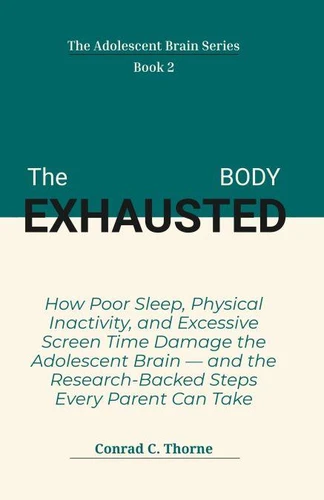
THE EXHAUSTED BODY. The Adolescent Brain Series, #2
Par :Formats :
Disponible dans votre compte client Decitre ou Furet du Nord dès validation de votre commande. Le format ePub est :
- Compatible avec une lecture sur My Vivlio (smartphone, tablette, ordinateur)
- Compatible avec une lecture sur liseuses Vivlio
- Pour les liseuses autres que Vivlio, vous devez utiliser le logiciel Adobe Digital Edition. Non compatible avec la lecture sur les liseuses Kindle, Remarkable et Sony
 , qui est-ce ?
Notre partenaire de plateforme de lecture numérique où vous retrouverez l'ensemble de vos ebooks gratuitement
Pour en savoir plus sur nos ebooks, consultez notre aide en ligne ici
C'est si simple ! Lisez votre ebook avec l'app Vivlio sur votre tablette, mobile ou ordinateur :

- FormatePub
- ISBN8235678538
- EAN9798235678538
- Date de parution31/07/2026
- Protection num.pas de protection
- Infos supplémentairesepub
- ÉditeurIoakim Ioakim
Résumé
Something is wrong with your teenager. Not crisis wrong. Just persistently, quietly, inexplicably wrong. The tiredness that no amount of sleep seems to fix. The mood that shifts without warning. The motivation that was there last year and seems to have quietly given up. Most caring adults reach for the obvious explanations: the phone, the peer group, puberty. Each of those contains some truth. None of them is the whole answer.
The Exhausted Body gives you the part of the answer that most parents have never been given - because it lives in the intersection of sleep medicine, brain science, nutritional biology, and exercise physiology, and almost never makes it into the conversations that parents actually have. Here is the finding that changes the frame: The epidemic of teenage exhaustion, emotional instability, and chronic underperformance is not primarily a screen problem or a motivation problem.
It is a biological timing problem. The modern world has systematically desynchronised the adolescent body clock - and the consequences reach further, and run deeper, than most adults have been told. In twelve chapters, grounded in peer-reviewed research and written in plain English, this book gives you: Why your teenager cannot get out of bed in the morning (it is not attitude - it is a documented, universal, genetically influenced shift that peaks at age nineteen) What the light in their bedroom at night is doing to their mood circuits, independently of any screen Why managing sleep, movement, and screen time separately produces modest results - and what changes when you manage them as a system What exercise does to the brain's blood vessels, reward systems, and depression risk - specifically and measurably Why belonging is a biological necessity, not a social preference, and what happens when it is absent What the research shows about LGBTQ+ teenagers, minority stress, and what caring adults can actually do When the approaches in this book are not enough - and who to call Every chapter closes with a practical toolkit.
Not "get more sleep." The specific hour that matters. The exact movement protocol that rebuilds a depleted prefrontal cortex. The conversation script that monitoring research identifies as the difference between protection and harm. The biology is the engine. You are still the most important variable. This book explains both.
The Exhausted Body gives you the part of the answer that most parents have never been given - because it lives in the intersection of sleep medicine, brain science, nutritional biology, and exercise physiology, and almost never makes it into the conversations that parents actually have. Here is the finding that changes the frame: The epidemic of teenage exhaustion, emotional instability, and chronic underperformance is not primarily a screen problem or a motivation problem.
It is a biological timing problem. The modern world has systematically desynchronised the adolescent body clock - and the consequences reach further, and run deeper, than most adults have been told. In twelve chapters, grounded in peer-reviewed research and written in plain English, this book gives you: Why your teenager cannot get out of bed in the morning (it is not attitude - it is a documented, universal, genetically influenced shift that peaks at age nineteen) What the light in their bedroom at night is doing to their mood circuits, independently of any screen Why managing sleep, movement, and screen time separately produces modest results - and what changes when you manage them as a system What exercise does to the brain's blood vessels, reward systems, and depression risk - specifically and measurably Why belonging is a biological necessity, not a social preference, and what happens when it is absent What the research shows about LGBTQ+ teenagers, minority stress, and what caring adults can actually do When the approaches in this book are not enough - and who to call Every chapter closes with a practical toolkit.
Not "get more sleep." The specific hour that matters. The exact movement protocol that rebuilds a depleted prefrontal cortex. The conversation script that monitoring research identifies as the difference between protection and harm. The biology is the engine. You are still the most important variable. This book explains both.