SOLDES
Jusqu'à -70% sur une sélection d'articles*

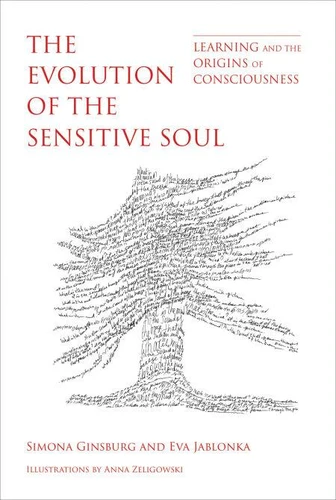
The Evolution of the Sensitive Soul /anglais
Par :Formats :
Disponible dans votre compte client Decitre ou Furet du Nord dès validation de votre commande. Le format ePub protégé est :
- Compatible avec une lecture sur My Vivlio (smartphone, tablette, ordinateur)
- Compatible avec une lecture sur liseuses Vivlio
- Pour les liseuses autres que Vivlio, vous devez utiliser le logiciel Adobe Digital Edition. Non compatible avec la lecture sur les liseuses Kindle, Remarkable et Sony
- Non compatible avec un achat hors France métropolitaine
 , qui est-ce ?
Notre partenaire de plateforme de lecture numérique où vous retrouverez l'ensemble de vos ebooks gratuitement
Pour en savoir plus sur nos ebooks, consultez notre aide en ligne ici
C'est si simple ! Lisez votre ebook avec l'app Vivlio sur votre tablette, mobile ou ordinateur :

- Nombre de pages640
- FormatePub
- ISBN978-0-262-35110-2
- EAN9780262351102
- Date de parution12/03/2019
- Protection num.Adobe DRM
- Taille71 Mo
- Infos supplémentairesepub
- ÉditeurThe MIT Press
Résumé
A new theory about the origins of consciousness that finds learning to be the driving force in the evolutionary transition to basic consciousness. What marked the evolutionary transition from organisms that lacked consciousness to those with consciousness-to minimal subjective experiencing, or, as Aristotle described it, "the sensitive soul"? In this book, Simona Ginsburg and Eva Jablonka propose a new theory about the origin of consciousness that finds learning to be the driving force in the transition to basic consciousness.
Using a methodology similar to that used by scientists when they identified the transition from non-life to life, Ginsburg and Jablonka suggest a set of criteria, identify a marker for the transition to minimal consciousness, and explore the far-reaching biological, psychological, and philosophical implications. After presenting the historical, neurobiological, and philosophical foundations of their analysis, Ginsburg and Jablonka propose that the evolutionary marker of basic or minimal consciousness is a complex form of associative learning, which they term unlimited associative learning (UAL).
UAL enables an organism to ascribe motivational value to a novel, compound, non-reflex-inducing stimulus or action, and use it as the basis for future learning. Associative learning, Ginsburg and Jablonka argue, drove the Cambrian explosion and its massive diversification of organisms. Finally, Ginsburg and Jablonka propose symbolic language as a similar type of marker for the evolutionary transition to human rationality-to Aristotle's "rational soul."
Using a methodology similar to that used by scientists when they identified the transition from non-life to life, Ginsburg and Jablonka suggest a set of criteria, identify a marker for the transition to minimal consciousness, and explore the far-reaching biological, psychological, and philosophical implications. After presenting the historical, neurobiological, and philosophical foundations of their analysis, Ginsburg and Jablonka propose that the evolutionary marker of basic or minimal consciousness is a complex form of associative learning, which they term unlimited associative learning (UAL).
UAL enables an organism to ascribe motivational value to a novel, compound, non-reflex-inducing stimulus or action, and use it as the basis for future learning. Associative learning, Ginsburg and Jablonka argue, drove the Cambrian explosion and its massive diversification of organisms. Finally, Ginsburg and Jablonka propose symbolic language as a similar type of marker for the evolutionary transition to human rationality-to Aristotle's "rational soul."