
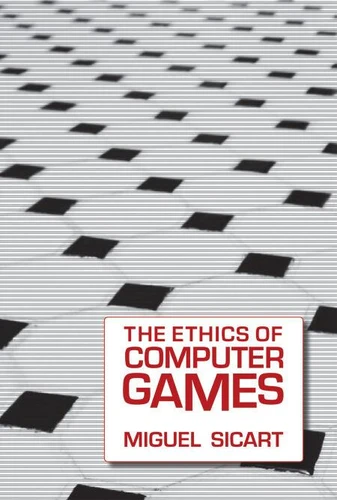
The Ethics of Computer Games
Par :Formats :
Disponible dans votre compte client Decitre ou Furet du Nord dès validation de votre commande. Le format ePub protégé est :
- Compatible avec une lecture sur My Vivlio (smartphone, tablette, ordinateur)
- Compatible avec une lecture sur liseuses Vivlio
- Pour les liseuses autres que Vivlio, vous devez utiliser le logiciel Adobe Digital Edition. Non compatible avec la lecture sur les liseuses Kindle, Remarkable et Sony
- Non compatible avec un achat hors France métropolitaine
 , qui est-ce ?
Notre partenaire de plateforme de lecture numérique où vous retrouverez l'ensemble de vos ebooks gratuitement
Pour en savoir plus sur nos ebooks, consultez notre aide en ligne ici
C'est si simple ! Lisez votre ebook avec l'app Vivlio sur votre tablette, mobile ou ordinateur :

- Nombre de pages272
- FormatePub
- ISBN978-0-262-26153-1
- EAN9780262261531
- Date de parution19/08/2011
- Protection num.Adobe DRM
- Taille1 Mo
- Infos supplémentairesepub
- ÉditeurThe MIT Press
Résumé
Why computer games can be ethical, how players use their ethical values in gameplay, and the implications for game design. Despite the emergence of computer games as a dominant cultural industry (and the accompanying emergence of computer games as the subject of scholarly research), we know little or nothing about the ethics of computer games. Considerations of the morality of computer games seldom go beyond intermittent portrayals of them in the mass media as training devices for teenage serial killers.
In this first scholarly exploration of the subject, Miguel Sicart addresses broader issues about the ethics of games, the ethics of playing the games, and the ethical responsibilities of game designers. He argues that computer games are ethical objects, that computer game players are ethical agents, and that the ethics of computer games should be seen as a complex network of responsibilities and moral duties.
Players should not be considered passive amoral creatures; they reflect, relate, and create with ethical minds. The games they play are ethical systems, with rules that create gameworlds with values at play. Drawing on concepts from philosophy and game studies, Sicart proposes a framework for analyzing the ethics of computer games as both designed objects and player experiences. After presenting his core theoretical arguments and offering a general theory for understanding computer game ethics, Sicart offers case studies examining single-player games (using Bioshock as an example), multiplayer games (illustrated by Defcon), and online gameworlds (illustrated by World of Warcraft) from an ethical perspective.
He explores issues raised by unethical content in computer games and its possible effect on players and offers a synthesis of design theory and ethics that could be used as both analytical tool and inspiration in the creation of ethical gameplay.
In this first scholarly exploration of the subject, Miguel Sicart addresses broader issues about the ethics of games, the ethics of playing the games, and the ethical responsibilities of game designers. He argues that computer games are ethical objects, that computer game players are ethical agents, and that the ethics of computer games should be seen as a complex network of responsibilities and moral duties.
Players should not be considered passive amoral creatures; they reflect, relate, and create with ethical minds. The games they play are ethical systems, with rules that create gameworlds with values at play. Drawing on concepts from philosophy and game studies, Sicart proposes a framework for analyzing the ethics of computer games as both designed objects and player experiences. After presenting his core theoretical arguments and offering a general theory for understanding computer game ethics, Sicart offers case studies examining single-player games (using Bioshock as an example), multiplayer games (illustrated by Defcon), and online gameworlds (illustrated by World of Warcraft) from an ethical perspective.
He explores issues raised by unethical content in computer games and its possible effect on players and offers a synthesis of design theory and ethics that could be used as both analytical tool and inspiration in the creation of ethical gameplay.
A propos de Miguel Sicart
Play Matters
E-book
24,52 €
29,42 €