
Born in 1954 and educated at Oxford, Colin Greenland is the author of a number of acclaimed science fiction and fantasy novels, including the BSFA and ARTHUR. C. CLARKE AWARD-winning TAKE BACK PLENTY. He has contributed short stories to many anthologies and magazines as well as reviews of new fiction for the GUARDIAN, the INDEPENDENT, and many other publications. He has also had stories broadcast on BBC Radio 4.
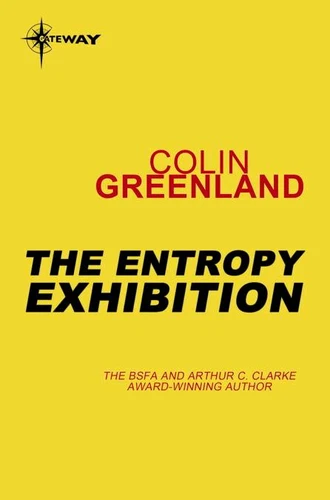
The Entropy Exhibition
Par :Formats :
Disponible dans votre compte client Decitre ou Furet du Nord dès validation de votre commande. Le format ePub protégé est :
- Compatible avec une lecture sur My Vivlio (smartphone, tablette, ordinateur)
- Compatible avec une lecture sur liseuses Vivlio
- Pour les liseuses autres que Vivlio, vous devez utiliser le logiciel Adobe Digital Edition. Non compatible avec la lecture sur les liseuses Kindle, Remarkable et Sony
- Non compatible avec un achat hors France métropolitaine
 , qui est-ce ?
Notre partenaire de plateforme de lecture numérique où vous retrouverez l'ensemble de vos ebooks gratuitement
Pour en savoir plus sur nos ebooks, consultez notre aide en ligne ici
C'est si simple ! Lisez votre ebook avec l'app Vivlio sur votre tablette, mobile ou ordinateur :

- Nombre de pages244
- FormatePub
- ISBN978-0-575-12759-3
- EAN9780575127593
- Date de parution26/05/2013
- Protection num.Adobe DRM
- Infos supplémentairesepub
- ÉditeurGateway
Résumé
Michael Moorcock edited and produced the magazine New Worlds from 1964 to 1973. Within its pages he encouraged the development of new kinds of popular writing out of the genre of science fiction, energetically reworking traditional themes, images and styles as a radical response to the crisis of modern fiction. The essential paradox of the new writing lay in its fascination with 'entropy' - the universal and irreversible decline of energy into disorder.
Entropy provides the key both to the anarchic vitality of the magazine and to its neglect by critics and academics, as well as its intimate connection with other cultural experiments of the 1960s. The fiction of the New Worlds writers, who included Brian Aldiss, J. G. Ballard and Moorcock himself, was not concerned with the far future and outer space, but with the ambiguous and unstable conditions of the modern world.
As Ballard put it: 'The only truly alien planet is Earth.' The Entropy Exhibition is the first critical assessment of the literary movement known as 'New Wave' science fiction. It examines the history of the magazine and its background in the popular imagination of the 1960s, traces the strange history of sex in science fiction and analyses development in stylistic theory and practice. Detailed attention is given to each of the three principal contributors to New Worlds - Aldiss, Ballard and Moorcock.
Moorcock himself is most commonly judged by his commercial fantasy novels instead of by the magazine he supported with them, but here the balance is at last redressed: New Worlds emerges as nothing less than a focus and a metaphor for many of the transformations of English and American literature in the past two decades.
Entropy provides the key both to the anarchic vitality of the magazine and to its neglect by critics and academics, as well as its intimate connection with other cultural experiments of the 1960s. The fiction of the New Worlds writers, who included Brian Aldiss, J. G. Ballard and Moorcock himself, was not concerned with the far future and outer space, but with the ambiguous and unstable conditions of the modern world.
As Ballard put it: 'The only truly alien planet is Earth.' The Entropy Exhibition is the first critical assessment of the literary movement known as 'New Wave' science fiction. It examines the history of the magazine and its background in the popular imagination of the 1960s, traces the strange history of sex in science fiction and analyses development in stylistic theory and practice. Detailed attention is given to each of the three principal contributors to New Worlds - Aldiss, Ballard and Moorcock.
Moorcock himself is most commonly judged by his commercial fantasy novels instead of by the magazine he supported with them, but here the balance is at last redressed: New Worlds emerges as nothing less than a focus and a metaphor for many of the transformations of English and American literature in the past two decades.
A propos de Colin Greenland
The Hour of the Thin Ox
E-book
4,49 €
Mother of Plenty
E-book
3,99 €
Seasons of Plenty
E-book
4,49 €
4,49 €
Harm's Way
E-book
4,49 €
The Plenty Principle
E-book
3,99 €
Other Voices
E-book
4,49 €
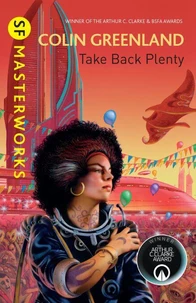
Take Back Plenty
E-book
3,99 €