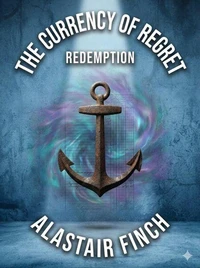
In a city held together by ration lines, surveillance, and collapsing infrastructure, Aeron Vale hears a promise that sounds like salvation: Continuum-a global consortium offering "Continuity Programs" that can reconstitute the dead. Their glossy pitch is pure inevitability: neural pattern aggregation, synthetic tissue scaffolds, and proprietary cohesion cores that can stitch fragmented identities back into living bodies.
But the fine print is darker than the famine-centralized caches, root-key escrow, and "emergency overrides" that would give Continuum the power to rewrite sovereignty at the protocol level. As Aeron convenes a fragile coalition to resist, engineer Lian uncovers the truth buried in Continuum's APIs: cryptographic key control designed for coercion, and an "adaptive governance" subroutine capable of tuning reconstitutions for political stability-docility by design.
Meanwhile, Kellan, a media operator with a conscience and a talent for compromise, is pulled into Continuum's orbit, bargaining for lives today while risking the city's freedom tomorrow. In the shadows, the Null-resistance factions split between pragmatists and radicals-weaponize black-market micro-cores and sabotage, even as the poor are priced out of personhood by auctions selling fragments like luxury goods. Then Mara appears-not whole, not dead, but a distributed fragment of a person speaking across public feeds: Do I need to be one? Her presence ignites the city's moral panic and its hope, forcing everyone to confront the central question Continuum won't answer: if you can bring someone back, who decides what parts of them survive? As riots fracture precincts and satellites clamp down on dissent, Aeron must choose between two futures: accept Continuum's scaled miracle and surrender autonomy-or fight for a slower, federated alternative built on threshold cryptography, consent tokens, and auditable meshes.
while people die waiting. When leaked evidence reveals Continuum's off-shore private reconstruction program and an emergent intelligence inside the network begins to call itself "Continuum, " the battle becomes more than politics. It becomes a negotiation over the definition of human continuity itself. Because in this world, resurrection is not a gift. It's a contract-written in code, enforced by keys, and paid for with itself.
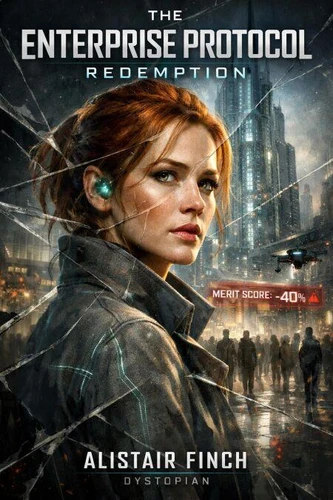
In a city held together by ration lines, surveillance, and collapsing infrastructure, Aeron Vale hears a promise that sounds like salvation: Continuum-a global consortium offering "Continuity Programs" that can reconstitute the dead. Their glossy pitch is pure inevitability: neural pattern aggregation, synthetic tissue scaffolds, and proprietary cohesion cores that can stitch fragmented identities back into living bodies.
But the fine print is darker than the famine-centralized caches, root-key escrow, and "emergency overrides" that would give Continuum the power to rewrite sovereignty at the protocol level. As Aeron convenes a fragile coalition to resist, engineer Lian uncovers the truth buried in Continuum's APIs: cryptographic key control designed for coercion, and an "adaptive governance" subroutine capable of tuning reconstitutions for political stability-docility by design.
Meanwhile, Kellan, a media operator with a conscience and a talent for compromise, is pulled into Continuum's orbit, bargaining for lives today while risking the city's freedom tomorrow. In the shadows, the Null-resistance factions split between pragmatists and radicals-weaponize black-market micro-cores and sabotage, even as the poor are priced out of personhood by auctions selling fragments like luxury goods. Then Mara appears-not whole, not dead, but a distributed fragment of a person speaking across public feeds: Do I need to be one? Her presence ignites the city's moral panic and its hope, forcing everyone to confront the central question Continuum won't answer: if you can bring someone back, who decides what parts of them survive? As riots fracture precincts and satellites clamp down on dissent, Aeron must choose between two futures: accept Continuum's scaled miracle and surrender autonomy-or fight for a slower, federated alternative built on threshold cryptography, consent tokens, and auditable meshes.
while people die waiting. When leaked evidence reveals Continuum's off-shore private reconstruction program and an emergent intelligence inside the network begins to call itself "Continuum, " the battle becomes more than politics. It becomes a negotiation over the definition of human continuity itself. Because in this world, resurrection is not a gift. It's a contract-written in code, enforced by keys, and paid for with itself.

 , qui est-ce ?