SOLDES
Jusqu'à -70% sur une sélection d'articles*

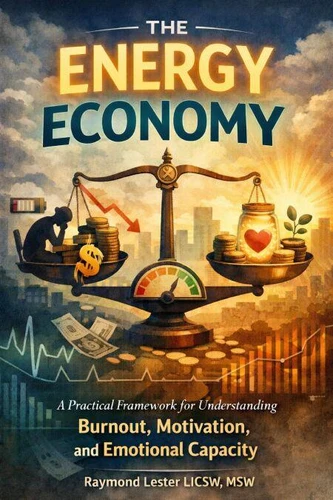
The Energy Economy - a Practical Framework for Understanding Burnout, Motivation, and Emotional Capacity
Par :Formats :
Disponible dans votre compte client Decitre ou Furet du Nord dès validation de votre commande. Le format ePub est :
- Compatible avec une lecture sur My Vivlio (smartphone, tablette, ordinateur)
- Compatible avec une lecture sur liseuses Vivlio
- Pour les liseuses autres que Vivlio, vous devez utiliser le logiciel Adobe Digital Edition. Non compatible avec la lecture sur les liseuses Kindle, Remarkable et Sony
 , qui est-ce ?
Notre partenaire de plateforme de lecture numérique où vous retrouverez l'ensemble de vos ebooks gratuitement
Pour en savoir plus sur nos ebooks, consultez notre aide en ligne ici
C'est si simple ! Lisez votre ebook avec l'app Vivlio sur votre tablette, mobile ou ordinateur :

- FormatePub
- ISBN8233446474
- EAN9798233446474
- Date de parution18/01/2026
- Protection num.pas de protection
- Infos supplémentairesepub
- ÉditeurLinda Balsamo
Résumé
Why does everything feel harder than it used to even when you're trying?If you're exhausted, overwhelmed, or burned out despite effort, motivation, or rest, this book offers a different explanation. The Energy Economy introduces a practical, shame-free framework for understanding burnout, motivation, and emotional capacity. Instead of treating exhaustion as a failure of discipline or mindset, this model reframes energy as a limited, non-moral resource shaped by cognitive load, emotional labor, nervous system activation, executive functioning, sensory processing, and social demands.
Drawing on clinical insight and real-world experience, licensed clinical social worker Raymond Lester presents burnout as a predictable outcome of prolonged overload-not a personal flaw. When stress, trauma, illness, neurodivergence, caregiving, or modern work demands raise the cost of everyday life, even simple tasks can become draining. Pushing harder doesn't restore capacity; it deepens the deficit.
This book replaces "try harder" advice with a clearer question: What is my energy actually being spent on, and what is it costing me?Inside, you'll learn: Why burnout is not a motivation problem How chronic stress creates energy inflation and emotional debt Why rest alone often doesn't fix exhaustion How boundaries function as economic policy, not selfishness The difference between short-term overload and structural energy poverty How introverted and extroverted environments can inflate or deflate energy How to reduce demand and rebuild capacity without shame or optimization culture The Energy Economy is not a productivity system or a self-improvement plan.
It is a framework for making sense of why life feels unsustainably expensive, and for finding ways to live within your limits without losing your identity or worth. Written for burned-out professionals, caregivers, parents, neurodivergent adults, and anyone tired of being told they just need more motivation, this book offers clarity, validation, and a path toward sustainable functioning. You are not broken.
The economy you've been operating in is.
Drawing on clinical insight and real-world experience, licensed clinical social worker Raymond Lester presents burnout as a predictable outcome of prolonged overload-not a personal flaw. When stress, trauma, illness, neurodivergence, caregiving, or modern work demands raise the cost of everyday life, even simple tasks can become draining. Pushing harder doesn't restore capacity; it deepens the deficit.
This book replaces "try harder" advice with a clearer question: What is my energy actually being spent on, and what is it costing me?Inside, you'll learn: Why burnout is not a motivation problem How chronic stress creates energy inflation and emotional debt Why rest alone often doesn't fix exhaustion How boundaries function as economic policy, not selfishness The difference between short-term overload and structural energy poverty How introverted and extroverted environments can inflate or deflate energy How to reduce demand and rebuild capacity without shame or optimization culture The Energy Economy is not a productivity system or a self-improvement plan.
It is a framework for making sense of why life feels unsustainably expensive, and for finding ways to live within your limits without losing your identity or worth. Written for burned-out professionals, caregivers, parents, neurodivergent adults, and anyone tired of being told they just need more motivation, this book offers clarity, validation, and a path toward sustainable functioning. You are not broken.
The economy you've been operating in is.