SOLDES
Jusqu'à -70% sur une sélection d'articles*

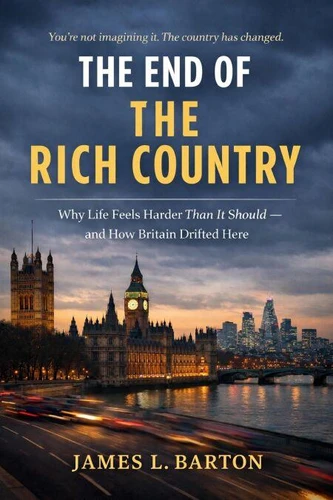
The End Of The Rich Country: Why Life Feels Harder Than It Should — and How Britain Drifted Here
Par :Formats :
Disponible dans votre compte client Decitre ou Furet du Nord dès validation de votre commande. Le format ePub est :
- Compatible avec une lecture sur My Vivlio (smartphone, tablette, ordinateur)
- Compatible avec une lecture sur liseuses Vivlio
- Pour les liseuses autres que Vivlio, vous devez utiliser le logiciel Adobe Digital Edition. Non compatible avec la lecture sur les liseuses Kindle, Remarkable et Sony
 , qui est-ce ?
Notre partenaire de plateforme de lecture numérique où vous retrouverez l'ensemble de vos ebooks gratuitement
Pour en savoir plus sur nos ebooks, consultez notre aide en ligne ici
C'est si simple ! Lisez votre ebook avec l'app Vivlio sur votre tablette, mobile ou ordinateur :

- FormatePub
- ISBN8232014704
- EAN9798232014704
- Date de parution22/12/2025
- Protection num.pas de protection
- Infos supplémentairesepub
- ÉditeurDraft2Digital
Résumé
Why does life in Britain feel harder than it should?This book starts from a simple observation shared quietly by millions: things still work, but they no longer feel as if they work for you. Money doesn't stretch as far. Work feels heavier without delivering greater security. Taxes rise, yet services feel thinner. Housing dominates life decisions. Nothing is collapsing - but everything feels tighter.
The End of the Rich Country argues that this discomfort is not personal failure, pessimism, or nostalgia. It is the result of a long structural shift. Britain still looks like a rich country on paper, but it increasingly functions like an asset-rich, income-poor one for a growing share of its population. Rather than offering slogans or blame, the book explains how this happened. It examines the slow drift from productive growth to asset dependence, the housing trap, stagnant wages, regional imbalance, declining productivity, and the quiet rationing of public services.
It shows how a country can remain stable, orderly, and internationally respectable while becoming progressively less workable for everyday life. This is not a manifesto and not a prediction of collapse. It does not promise easy fixes or ideological comfort. Instead, it offers a clear diagnosis of the pressures shaping modern Britain - why effort no longer reliably turns into reward, why standing still has replaced progress, and why so many people feel busy without getting ahead.
Written in a calm, non-partisan tone, The End of the Rich Country is for readers who sense something has changed but struggle to name it. Its aim is clarity rather than outrage: to explain the forces at work, the trade-offs involved, and the reality Britain now faces as the cushion of past wealth thins. This book is a diagnosis, not a manifesto.
The End of the Rich Country argues that this discomfort is not personal failure, pessimism, or nostalgia. It is the result of a long structural shift. Britain still looks like a rich country on paper, but it increasingly functions like an asset-rich, income-poor one for a growing share of its population. Rather than offering slogans or blame, the book explains how this happened. It examines the slow drift from productive growth to asset dependence, the housing trap, stagnant wages, regional imbalance, declining productivity, and the quiet rationing of public services.
It shows how a country can remain stable, orderly, and internationally respectable while becoming progressively less workable for everyday life. This is not a manifesto and not a prediction of collapse. It does not promise easy fixes or ideological comfort. Instead, it offers a clear diagnosis of the pressures shaping modern Britain - why effort no longer reliably turns into reward, why standing still has replaced progress, and why so many people feel busy without getting ahead.
Written in a calm, non-partisan tone, The End of the Rich Country is for readers who sense something has changed but struggle to name it. Its aim is clarity rather than outrage: to explain the forces at work, the trade-offs involved, and the reality Britain now faces as the cushion of past wealth thins. This book is a diagnosis, not a manifesto.