SOLDES
Jusqu'à -70% sur une sélection d'articles*

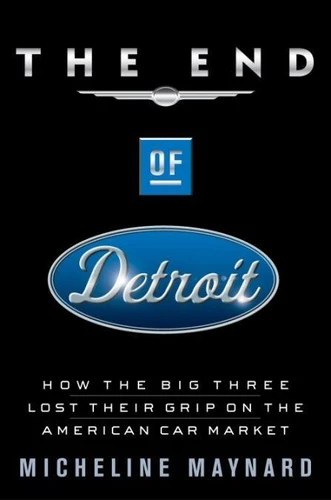
The End of Detroit. How the Big Three Lost Their Grip on the American Car Market
Par :Formats :
Disponible dans votre compte client Decitre ou Furet du Nord dès validation de votre commande. Le format ePub protégé est :
- Compatible avec une lecture sur My Vivlio (smartphone, tablette, ordinateur)
- Compatible avec une lecture sur liseuses Vivlio
- Pour les liseuses autres que Vivlio, vous devez utiliser le logiciel Adobe Digital Edition. Non compatible avec la lecture sur les liseuses Kindle, Remarkable et Sony
- Non compatible avec un achat hors France métropolitaine
 , qui est-ce ?
Notre partenaire de plateforme de lecture numérique où vous retrouverez l'ensemble de vos ebooks gratuitement
Pour en savoir plus sur nos ebooks, consultez notre aide en ligne ici
C'est si simple ! Lisez votre ebook avec l'app Vivlio sur votre tablette, mobile ou ordinateur :

- Nombre de pages336
- FormatePub
- ISBN0-385-51152-3
- EAN9780385511520
- Date de parution23/09/2003
- Protection num.Adobe DRM
- Taille636 Ko
- Infos supplémentairesepub
- ÉditeurCrown Currency
Résumé
An in-depth, hard-hitting account of the mistakes, miscalculations and myopia that have doomed America's automobile industry. In the 1990s, Detroit's Big Three automobile companies were riding high. The introduction of the minivan and the SUV had revitalized the industry, and it was widely believed that Detroit had miraculously overcome the threat of foreign imports and regained its ascendant position.
As Micheline Maynard makes brilliantly clear in THE END OF DETROIT, however, the traditional American car industry was, in fact, headed for disaster. Maynard argues that by focusing on high-profit trucks and SUVs, the Big Three missed a golden opportunity to win back the American car-buyer. Foreign companies like Toyota and Honda solidified their dominance in family and economy cars, gained market share in high-margin luxury cars, and, in an ironic twist, soon stormed in with their own sophisticatedly engineered and marketed SUVs, pickups and minivans.
Detroit, suffering from a "good enough" syndrome and wedded to ineffective marketing gimmicks like rebates and zero-percent financing, failed to give consumers what they really wanted-reliability, the latest technology and good design at a reasonable cost. Drawing on a wide range of interviews with industry leaders, including Toyota's Fujio Cho, Nissan's Carlos Ghosn, Chrysler's Dieter Zetsche, BMW's Helmut Panke, and GM's Robert Lutz, as well as car designers, engineers, test drivers and owners, Maynard presents a stark picture of the culture of arrogance and insularity that led American car manufacturers astray.
Maynard predicts that, by the end of the decade, one of the American car makers will no longer exist in its present form.
As Micheline Maynard makes brilliantly clear in THE END OF DETROIT, however, the traditional American car industry was, in fact, headed for disaster. Maynard argues that by focusing on high-profit trucks and SUVs, the Big Three missed a golden opportunity to win back the American car-buyer. Foreign companies like Toyota and Honda solidified their dominance in family and economy cars, gained market share in high-margin luxury cars, and, in an ironic twist, soon stormed in with their own sophisticatedly engineered and marketed SUVs, pickups and minivans.
Detroit, suffering from a "good enough" syndrome and wedded to ineffective marketing gimmicks like rebates and zero-percent financing, failed to give consumers what they really wanted-reliability, the latest technology and good design at a reasonable cost. Drawing on a wide range of interviews with industry leaders, including Toyota's Fujio Cho, Nissan's Carlos Ghosn, Chrysler's Dieter Zetsche, BMW's Helmut Panke, and GM's Robert Lutz, as well as car designers, engineers, test drivers and owners, Maynard presents a stark picture of the culture of arrogance and insularity that led American car manufacturers astray.
Maynard predicts that, by the end of the decade, one of the American car makers will no longer exist in its present form.