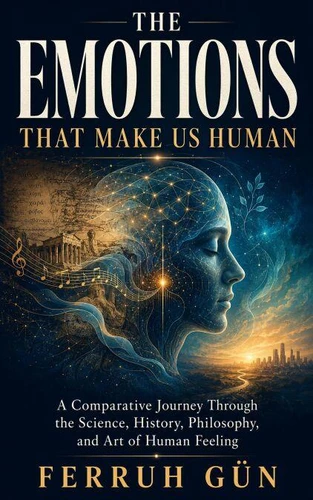
Why can grief weaken the body, music transform a mood, and a single expression alter the course of a relationship, a courtroom, or a society?The Emotions That Make Us Human is an interdisciplinary exploration of the forces that shape our inner lives. Moving across psychology, neuroscience, history, philosophy, religion, literature, art, law, politics, and artificial intelligence, Ferruh Gün examines how human beings experience, interpret, regulate, and express emotion.
Rather than treating feelings as private and irrational impulses, this book reveals them as complex systems formed by the body, the brain, memory, language, culture, and social life. It investigates love and attachment, grief and fear, anger and shame, awe and compassion-while asking how emotional experience changes across historical periods and cultural traditions. From Stoic philosophy and Sufi thought to modern affective neuroscience, from Ottoman emotional culture to contemporary debates about empathy and artificial intelligence, the book brings together ideas that are rarely considered within a single framework.
Accessible without oversimplifying its subject, The Emotions That Make Us Human is written for readers interested in the psychology and neuroscience of emotion, emotional regulation, philosophy, history, cultural psychology, and the influence of feeling on art, law, politics, and society. A wide-ranging journey into what emotions are, where they come from, and why they remain central to being human.
Why can grief weaken the body, music transform a mood, and a single expression alter the course of a relationship, a courtroom, or a society?The Emotions That Make Us Human is an interdisciplinary exploration of the forces that shape our inner lives. Moving across psychology, neuroscience, history, philosophy, religion, literature, art, law, politics, and artificial intelligence, Ferruh Gün examines how human beings experience, interpret, regulate, and express emotion.
Rather than treating feelings as private and irrational impulses, this book reveals them as complex systems formed by the body, the brain, memory, language, culture, and social life. It investigates love and attachment, grief and fear, anger and shame, awe and compassion-while asking how emotional experience changes across historical periods and cultural traditions. From Stoic philosophy and Sufi thought to modern affective neuroscience, from Ottoman emotional culture to contemporary debates about empathy and artificial intelligence, the book brings together ideas that are rarely considered within a single framework.
Accessible without oversimplifying its subject, The Emotions That Make Us Human is written for readers interested in the psychology and neuroscience of emotion, emotional regulation, philosophy, history, cultural psychology, and the influence of feeling on art, law, politics, and society. A wide-ranging journey into what emotions are, where they come from, and why they remain central to being human.