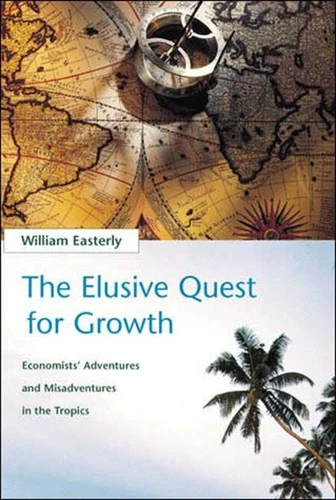
The Elusive Quest For Growth
Par :Formats :
Disponible dans votre compte client Decitre ou Furet du Nord dès validation de votre commande. Le format ePub protégé est :
- Compatible avec une lecture sur My Vivlio (smartphone, tablette, ordinateur)
- Compatible avec une lecture sur liseuses Vivlio
- Pour les liseuses autres que Vivlio, vous devez utiliser le logiciel Adobe Digital Edition. Non compatible avec la lecture sur les liseuses Kindle, Remarkable et Sony
- Non compatible avec un achat hors France métropolitaine
 , qui est-ce ?
Notre partenaire de plateforme de lecture numérique où vous retrouverez l'ensemble de vos ebooks gratuitement
Pour en savoir plus sur nos ebooks, consultez notre aide en ligne ici
C'est si simple ! Lisez votre ebook avec l'app Vivlio sur votre tablette, mobile ou ordinateur :

- Nombre de pages360
- FormatePub
- ISBN0-262-26065-4
- EAN9780262260657
- Date de parution02/08/2002
- Protection num.Adobe DRM
- Taille641 Ko
- Infos supplémentairesepub
- ÉditeurThe MIT Press
Résumé
EXPLORING THE DETRIMENTS OF ECONOMIC GROWTH: Why have economists' attempts to help poorer countries failed? "It is impossible to convey the depth and range of The Elusive Quest for Growth." -The Wall Street JournalSince the end of World War II, economists have tried to figure out how poor countries in the tropics could attain standards of living approaching those of countries in Europe and North America.
Attempted remedies have included providing foreign aid, investing in machines, fostering education, controlling population growth, and making aid loans as well as forgiving those loans on condition of reforms. None of these solutions has delivered as promised. The problem is not the failure of economics, William Easterly argues, but the failure to apply economic principles to practical policy work.
In this book, Easterly shows how these solutions all violate the basic principle of economics, that people-private individuals and businesses, government officials, even aid donors-respond to incentives. Easterly first discusses the importance of growth. He then analyzes the development solutions that have failed. Finally, he suggests alternative approaches to the problem. Written in an accessible, at times irreverent, style, Easterly's book combines modern growth theory with anecdotes from his fieldwork for the World Bank.
Attempted remedies have included providing foreign aid, investing in machines, fostering education, controlling population growth, and making aid loans as well as forgiving those loans on condition of reforms. None of these solutions has delivered as promised. The problem is not the failure of economics, William Easterly argues, but the failure to apply economic principles to practical policy work.
In this book, Easterly shows how these solutions all violate the basic principle of economics, that people-private individuals and businesses, government officials, even aid donors-respond to incentives. Easterly first discusses the importance of growth. He then analyzes the development solutions that have failed. Finally, he suggests alternative approaches to the problem. Written in an accessible, at times irreverent, style, Easterly's book combines modern growth theory with anecdotes from his fieldwork for the World Bank.