
Nouveauté
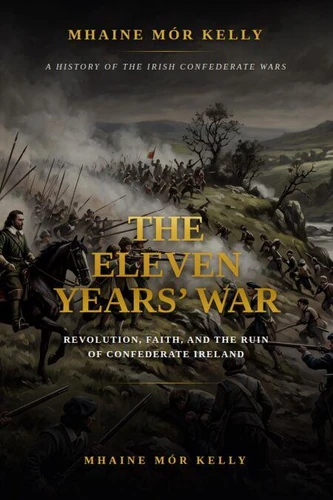
The Eleven Years' War: Revolution, Faith, and the Ruin of Confederate Ireland
Par :Formats :
Disponible dans votre compte client Decitre ou Furet du Nord dès validation de votre commande. Le format ePub est :
- Compatible avec une lecture sur My Vivlio (smartphone, tablette, ordinateur)
- Compatible avec une lecture sur liseuses Vivlio
- Pour les liseuses autres que Vivlio, vous devez utiliser le logiciel Adobe Digital Edition. Non compatible avec la lecture sur les liseuses Kindle, Remarkable et Sony
 , qui est-ce ?
Notre partenaire de plateforme de lecture numérique où vous retrouverez l'ensemble de vos ebooks gratuitement
Pour en savoir plus sur nos ebooks, consultez notre aide en ligne ici
C'est si simple ! Lisez votre ebook avec l'app Vivlio sur votre tablette, mobile ou ordinateur :

- FormatePub
- ISBN8235798250
- EAN9798235798250
- Date de parution18/07/2026
- Protection num.pas de protection
- Infos supplémentairesepub
- ÉditeurIoakim Ioakim
Résumé
In October 1641, a small circle of Irish gentlemen set out to seize Dublin Castle in a single, calculated night. They failed-and in failing, ignited eleven years of the bloodiest warfare Ireland has ever known. The Eleven Years' War traces the extraordinary rise and catastrophic fall of Confederate Ireland: a sovereign Catholic state built from nothing by dispossessed Gaelic lords, loyalist Old English gentry, and returning continental soldiers who had spent decades perfecting the art of war on Europe's battlefields.
This is a story of a government that taxed, minted coin, and commanded four standing armies while insisting, with careful constitutional fiction, that it was merely awaiting the King's grace. It is the story of Owen Roe O'Neill's tactical masterpiece at Benburb, and of the twin catastrophes at Dungan's Hill and Knocknanass that undid it within a year. It is the story of a Papal Nuncio who excommunicated his own allies, and of Oliver Cromwell, who arrived at Drogheda carrying the memory of a massacre eight years old and left a memory of his own that has never faded.
Drawing on siege records, parliamentary debate, and the demographic catastrophe that followed, this is narrative history on the grandest scale: meticulous, unflinching, and impossible to put down.
This is a story of a government that taxed, minted coin, and commanded four standing armies while insisting, with careful constitutional fiction, that it was merely awaiting the King's grace. It is the story of Owen Roe O'Neill's tactical masterpiece at Benburb, and of the twin catastrophes at Dungan's Hill and Knocknanass that undid it within a year. It is the story of a Papal Nuncio who excommunicated his own allies, and of Oliver Cromwell, who arrived at Drogheda carrying the memory of a massacre eight years old and left a memory of his own that has never faded.
Drawing on siege records, parliamentary debate, and the demographic catastrophe that followed, this is narrative history on the grandest scale: meticulous, unflinching, and impossible to put down.