The Economy of Rome: Social Impacts of Trade, Money, and Work by Philip Davies delves into the intricate economic systems that underpinned the Roman Empire, exploring the profound social and cultural implications of trade, money, and labor. This comprehensive work investigates the ways in which commerce, from local markets to vast imperial trade routes, facilitated the expansion of Roman power and prosperity.
It also examines the role of money as a stabilizing force in Roman society, providing the backbone for the empire's infrastructure, military, and urbanization. At the heart of this analysis is the exploration of Roman work and the labor force, including the complex dynamics of slavery, free labor, and the role of women in the economy. Davies offers insights into the systems of patronage and social mobility, examining how wealth and resources were distributed across the classes.
He also addresses the challenges of economic inequality, taxation, and the impact of Roman imperialism on the provinces. Drawing on primary sources from Roman historians, philosophers, and economists, this book offers a detailed examination of how economic practices shaped not only Roman governance and military conquests but also the daily lives of its people, from the urban elite to the working poor.
With a focus on the intersection of economics and social relations, The Economy of Rome offers a deeper understanding of how the empire's wealth and economic practices contributed to its eventual decline, while leaving a lasting legacy on the Western world.
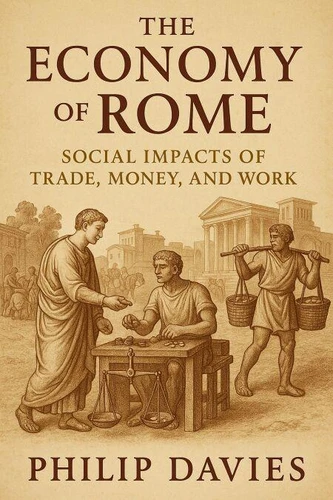
The Economy of Rome: Social Impacts of Trade, Money, and Work by Philip Davies delves into the intricate economic systems that underpinned the Roman Empire, exploring the profound social and cultural implications of trade, money, and labor. This comprehensive work investigates the ways in which commerce, from local markets to vast imperial trade routes, facilitated the expansion of Roman power and prosperity.
It also examines the role of money as a stabilizing force in Roman society, providing the backbone for the empire's infrastructure, military, and urbanization. At the heart of this analysis is the exploration of Roman work and the labor force, including the complex dynamics of slavery, free labor, and the role of women in the economy. Davies offers insights into the systems of patronage and social mobility, examining how wealth and resources were distributed across the classes.
He also addresses the challenges of economic inequality, taxation, and the impact of Roman imperialism on the provinces. Drawing on primary sources from Roman historians, philosophers, and economists, this book offers a detailed examination of how economic practices shaped not only Roman governance and military conquests but also the daily lives of its people, from the urban elite to the working poor.
With a focus on the intersection of economics and social relations, The Economy of Rome offers a deeper understanding of how the empire's wealth and economic practices contributed to its eventual decline, while leaving a lasting legacy on the Western world.


 , qui est-ce ?