
Paul Hawken's bestselling books include Blessed Unrest, Natural Capitalism, and The Next Economy. He has also written dozens of articles, op-eds, and papers concerning the responsibility of business to the natural environment. His writings have appeared in the Harvard Business Review, Inc magazine, the Boston Globe, the Utne Reader, and more than a hundred other publications.
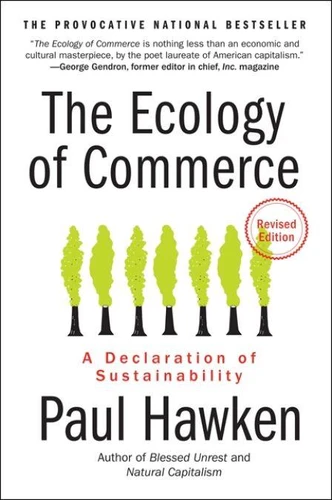
The Ecology of Commerce Revised Edition. A Declaration of Sustainability
Par :Formats :
Disponible dans votre compte client Decitre ou Furet du Nord dès validation de votre commande. Le format ePub protégé est :
- Compatible avec une lecture sur My Vivlio (smartphone, tablette, ordinateur)
- Compatible avec une lecture sur liseuses Vivlio
- Pour les liseuses autres que Vivlio, vous devez utiliser le logiciel Adobe Digital Edition. Non compatible avec la lecture sur les liseuses Kindle, Remarkable et Sony
- Non compatible avec un achat hors France métropolitaine
 , qui est-ce ?
Notre partenaire de plateforme de lecture numérique où vous retrouverez l'ensemble de vos ebooks gratuitement
Pour en savoir plus sur nos ebooks, consultez notre aide en ligne ici
C'est si simple ! Lisez votre ebook avec l'app Vivlio sur votre tablette, mobile ou ordinateur :

- FormatePub
- ISBN978-0-06-228146-3
- EAN9780062281463
- Date de parution05/03/2013
- Protection num.Adobe DRM
- Infos supplémentairesepub
- ÉditeurHarper Business
Résumé
The world has changed in the seventeen years since the controversial initial publication of Paul Hawken's Ecology of Commerce, a stirring treatise about the perceived antagonism between ecology and business. Yet Hawken's impassioned argument-that business both causes the most egregious abuses of the environment and, crucially, holds the most potential for solving our sustainability problems-is more relevant and resonant than ever.
Containing updated and revised material for a new audience, The Ecology of Commerce presents a compelling vision of the restorative (rather than destructive) economy we must create, centered on eight imperatives: Reduce energy carbon emissions 80 percent by 2030 and total natural resource usage 80 percent by 2050. Provide secure, stable, and meaningful employment to people everywhere. Be self-organizing rather than regulated or morally mandated.
Honor market principles. Restore habitats, ecosystems, and societies to their optimum. Rely on current income. Be fun and engaging, and strive for an aesthetic outcome.
Containing updated and revised material for a new audience, The Ecology of Commerce presents a compelling vision of the restorative (rather than destructive) economy we must create, centered on eight imperatives: Reduce energy carbon emissions 80 percent by 2030 and total natural resource usage 80 percent by 2050. Provide secure, stable, and meaningful employment to people everywhere. Be self-organizing rather than regulated or morally mandated.
Honor market principles. Restore habitats, ecosystems, and societies to their optimum. Rely on current income. Be fun and engaging, and strive for an aesthetic outcome.
A propos de Paul Hawken

22,00 €

Semeurs de forêts. Créer des forêts sanctuaires
Grand Format
22,00 €

Carbon. The Book of Life
E-book
5,72 €


35,00 €

36,00 €