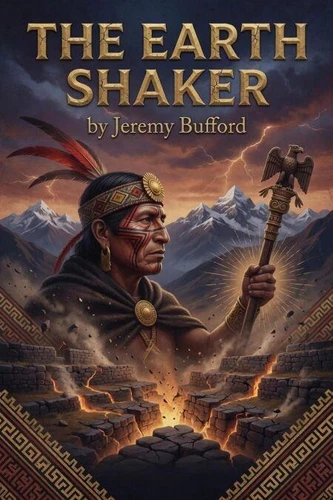
In the thin air of the high Andes, stones are said to have fought for the young Inca Yupanqui against the invading Chanca. He became Pachacuti, "He Who Shakes the Earth, " and bound the realm with stone roads and knotted cords of memory. Rumi, a warrior from a defeated ayllu, pledges his sling to the new order. He builds the first roads, fights in the Collasuyu campaigns, and sees the empire expand from a valley into four quarters.
Quilla, chosen as an aclla, masters the sky and quipus while old huacas fall silent; she weaves state cloth yet hides a second cord preserving erased names. Chimpu, a weaver-lord from Chan Chan, arrives in chains and masters imperial record-keeping-while quietly subverting it. Together they traverse the qhapaq ñan, tally the living and dead, and witness terraces replace villages, coastal cities submit or burn, children taken for capacocha, and artisans resettled.
They record the empire's hidden cost on a secret quipu. Yet every road runs both ways and every knot can be untied. When the price of order burdens the mountain people, the three must decide: a world that remembers every name, or one that keeps only the knots. From the 1438 Chanca crisis to the rise of Topa Inca, this is the story of the greatest pre-Columbian empire-and those who paid for it with all they held sacred.
The roads still run. The knots still count.
In the thin air of the high Andes, stones are said to have fought for the young Inca Yupanqui against the invading Chanca. He became Pachacuti, "He Who Shakes the Earth, " and bound the realm with stone roads and knotted cords of memory. Rumi, a warrior from a defeated ayllu, pledges his sling to the new order. He builds the first roads, fights in the Collasuyu campaigns, and sees the empire expand from a valley into four quarters.
Quilla, chosen as an aclla, masters the sky and quipus while old huacas fall silent; she weaves state cloth yet hides a second cord preserving erased names. Chimpu, a weaver-lord from Chan Chan, arrives in chains and masters imperial record-keeping-while quietly subverting it. Together they traverse the qhapaq ñan, tally the living and dead, and witness terraces replace villages, coastal cities submit or burn, children taken for capacocha, and artisans resettled.
They record the empire's hidden cost on a secret quipu. Yet every road runs both ways and every knot can be untied. When the price of order burdens the mountain people, the three must decide: a world that remembers every name, or one that keeps only the knots. From the 1438 Chanca crisis to the rise of Topa Inca, this is the story of the greatest pre-Columbian empire-and those who paid for it with all they held sacred.
The roads still run. The knots still count.

 , qui est-ce ?