The technology is not the hard part. The change is. Every government on earth has been promised that artificial intelligence will transform public services. Faster decisions. Lower costs. Citizens served in seconds instead of weeks. And yet, again and again, the chatbot is quietly switched off, the model goes unused, and the expensive platform becomes shelfware. It almost never fails for technical reasons.
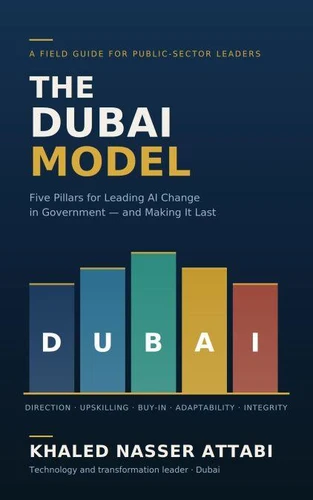
It fails because nobody led the human change around it. Drawing on original doctoral research inside one of the world's most ambitious government transformations, practitioner and researcher Khaled Nasser Attabi shows that public-sector AI succeeds or fails on five factors - and not one of them is an algorithm:. D - Direction. Someone has to steer, and keep steering.. U - Upskilling.
Capability, and the confidence to use it.. B - Buy-in. People support what they help build.. A - Adaptability. Pilot, learn, adjust, scale - never a big bang.. I - Integrity. Without trust, nothing holds. Together they form the DUBAI Model: a practical, field-tested framework for leading AI change in government - and making it last. Inside you will find documented case studies from Dubai, Estonia and Singapore, alongside hard lessons from the launch of Healthcare.gov, the UK exam-grading algorithm that put students on the streets, and the automated-decision scandals in the Netherlands and Australia that ruined tens of thousands of lives and brought down a government.
You will also find a complete implementation blueprint, a role-by-role plan for your first ninety days, a readiness self-assessment you can score today, and Reader's story prompts throughout that turn the book into a working diagnosis of your own transformation. Written for ministers and agency heads, chief AI and digital officers, transformation and PMO leaders, public-sector project managers, and the consultants who serve them - and for anyone leading change in a large, regulated, risk-aware organization.
The change can be led. This is how.
The technology is not the hard part. The change is. Every government on earth has been promised that artificial intelligence will transform public services. Faster decisions. Lower costs. Citizens served in seconds instead of weeks. And yet, again and again, the chatbot is quietly switched off, the model goes unused, and the expensive platform becomes shelfware. It almost never fails for technical reasons.
It fails because nobody led the human change around it. Drawing on original doctoral research inside one of the world's most ambitious government transformations, practitioner and researcher Khaled Nasser Attabi shows that public-sector AI succeeds or fails on five factors - and not one of them is an algorithm:. D - Direction. Someone has to steer, and keep steering.. U - Upskilling.
Capability, and the confidence to use it.. B - Buy-in. People support what they help build.. A - Adaptability. Pilot, learn, adjust, scale - never a big bang.. I - Integrity. Without trust, nothing holds. Together they form the DUBAI Model: a practical, field-tested framework for leading AI change in government - and making it last. Inside you will find documented case studies from Dubai, Estonia and Singapore, alongside hard lessons from the launch of Healthcare.gov, the UK exam-grading algorithm that put students on the streets, and the automated-decision scandals in the Netherlands and Australia that ruined tens of thousands of lives and brought down a government.
You will also find a complete implementation blueprint, a role-by-role plan for your first ninety days, a readiness self-assessment you can score today, and Reader's story prompts throughout that turn the book into a working diagnosis of your own transformation. Written for ministers and agency heads, chief AI and digital officers, transformation and PMO leaders, public-sector project managers, and the consultants who serve them - and for anyone leading change in a large, regulated, risk-aware organization.
The change can be led. This is how.


 , qui est-ce ?
