
Israel Simelane is an Eswatini author and communication practitioner whose writing explores faith, leadership, human behaviour, social issues, biblical themes, and contemporary events. His works combine investigative thinking with accessible storytelling, often examining familiar subjects from unconventional perspectives. He writes both Christian and general nonfiction, with a strong emphasis on truth, responsibility, wisdom, and the consequences of human choices.
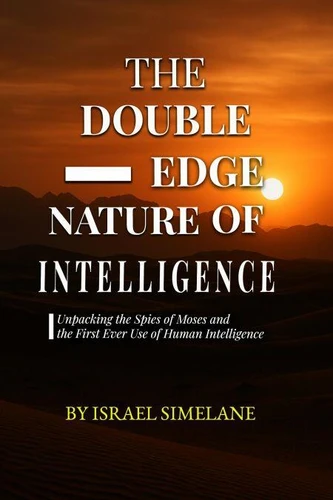
The Double-Edge Nature of Intelligence
Par :Formats :
Disponible dans votre compte client Decitre ou Furet du Nord dès validation de votre commande. Le format ePub est :
- Compatible avec une lecture sur My Vivlio (smartphone, tablette, ordinateur)
- Compatible avec une lecture sur liseuses Vivlio
- Pour les liseuses autres que Vivlio, vous devez utiliser le logiciel Adobe Digital Edition. Non compatible avec la lecture sur les liseuses Kindle, Remarkable et Sony
 , qui est-ce ?
Notre partenaire de plateforme de lecture numérique où vous retrouverez l'ensemble de vos ebooks gratuitement
Pour en savoir plus sur nos ebooks, consultez notre aide en ligne ici
C'est si simple ! Lisez votre ebook avec l'app Vivlio sur votre tablette, mobile ou ordinateur :

- FormatePub
- ISBN8231792306
- EAN9798231792306
- Date de parution18/05/2025
- Protection num.pas de protection
- Infos supplémentairesepub
- ÉditeurWalzone Press
Résumé
The Double-Edge Nature of Intelligence: Unpacking the Spies of Moses and the First Ever Use of Human Intelligence takes readers into one of Scripture's most revealing accounts of reconnaissance, reporting, leadership, and decision-making-the mission of the twelve spies sent by Moses to investigate the land of Canaan. Using this early and remarkably structured biblical account of human reconnaissance, author Israel Simelane examines the double-edge nature of intelligence: information can prepare, protect, guide, and empower, but the same information can mislead and damage when fear, bias, unbelief, personal interest, or poor interpretation corrupts the report.
Through investigative commentary, biblical analysis, and carefully identified illustrative reconstruction, the book distinguishes what Scripture explicitly records from the intelligence principles that can reasonably be drawn from it. It examines the selection of the spies, Moses' intelligence requirements, their observations in Canaan, the contrasting reports they brought back, and the national consequences that followed.
At the heart of the book is a challenging question: Can people observe genuine facts and still produce a dangerously distorted assessment? Joshua and Caleb encountered the same fortified cities, powerful inhabitants, and formidable obstacles as the other spies, yet they interpreted what they saw differently. The problem was therefore not simply the collection of information, but what happened between observation, interpretation, reporting, and decision-making.
The book also examines the Ten Commandments as an ethical lens for intelligence and explores the responsibilities that accompany privileged information. These ancient principles are brought into conversation with modern concerns including misinformation, disinformation, psychological influence, digital surveillance, cyber intelligence, analytical bias, leadership, and accountability. The Double-Edge Nature of Intelligence is both a biblical investigation and a leadership case study.
It challenges readers to consider not only what information they possess, but who collected it, how it was interpreted, whether it can be verified, how faithfully it was reported, and what consequences may follow when people act upon it. For leaders, Christians, investigators, analysts, communicators, students, and readers interested in intelligence and decision-making, the book delivers a timeless lesson:Intelligence is powerful-but information alone is never enough.
Truth requires accurate observation, disciplined interpretation, moral integrity, and the courage to report what the evidence actually supports.
Through investigative commentary, biblical analysis, and carefully identified illustrative reconstruction, the book distinguishes what Scripture explicitly records from the intelligence principles that can reasonably be drawn from it. It examines the selection of the spies, Moses' intelligence requirements, their observations in Canaan, the contrasting reports they brought back, and the national consequences that followed.
At the heart of the book is a challenging question: Can people observe genuine facts and still produce a dangerously distorted assessment? Joshua and Caleb encountered the same fortified cities, powerful inhabitants, and formidable obstacles as the other spies, yet they interpreted what they saw differently. The problem was therefore not simply the collection of information, but what happened between observation, interpretation, reporting, and decision-making.
The book also examines the Ten Commandments as an ethical lens for intelligence and explores the responsibilities that accompany privileged information. These ancient principles are brought into conversation with modern concerns including misinformation, disinformation, psychological influence, digital surveillance, cyber intelligence, analytical bias, leadership, and accountability. The Double-Edge Nature of Intelligence is both a biblical investigation and a leadership case study.
It challenges readers to consider not only what information they possess, but who collected it, how it was interpreted, whether it can be verified, how faithfully it was reported, and what consequences may follow when people act upon it. For leaders, Christians, investigators, analysts, communicators, students, and readers interested in intelligence and decision-making, the book delivers a timeless lesson:Intelligence is powerful-but information alone is never enough.
Truth requires accurate observation, disciplined interpretation, moral integrity, and the courage to report what the evidence actually supports.
A propos de Israel Simelane

0,99 €

0,99 €

The Helper's Reward
E-book
1,99 €

The Father's Heart
E-book
0,99 €
3,49 €
3,49 €

4,49 €

3,49 €
The Lunacy of a Nation
E-book
2,99 €

3,49 €

Dear GOD
E-book
1,99 €

The Case Against Satan
E-book
2,99 €

2,99 €

4,49 €

4,49 €
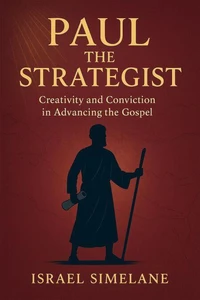
Paul the Strategist
E-book
4,49 €

5,49 €

2,99 €
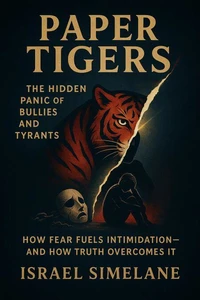
Paper Tigers
E-book
3,49 €

2,99 €