SOLDES
Jusqu'à -70% sur une sélection d'articles*

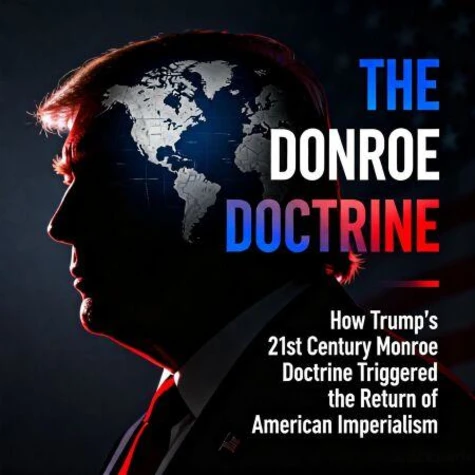
The Donroe Doctrine: How Trump's 21st Century Monroe Doctrine Triggered the Return of American Imperialism
Par :Formats :
Disponible dans votre compte client Decitre ou Furet du Nord dès validation de votre commande. Le format ePub est :
- Compatible avec une lecture sur My Vivlio (smartphone, tablette, ordinateur)
- Compatible avec une lecture sur liseuses Vivlio
- Pour les liseuses autres que Vivlio, vous devez utiliser le logiciel Adobe Digital Edition. Non compatible avec la lecture sur les liseuses Kindle, Remarkable et Sony
 , qui est-ce ?
Notre partenaire de plateforme de lecture numérique où vous retrouverez l'ensemble de vos ebooks gratuitement
Pour en savoir plus sur nos ebooks, consultez notre aide en ligne ici
C'est si simple ! Lisez votre ebook avec l'app Vivlio sur votre tablette, mobile ou ordinateur :

- FormatePub
- ISBN8233171536
- EAN9798233171536
- Date de parution12/01/2026
- Protection num.pas de protection
- Infos supplémentairesepub
- ÉditeurLinda Balsamo
Résumé
On December 4, 2025, buried in a twenty-nine-page National Security Strategy released late on a Thursday afternoon, the Trump administration announced a dramatic shift in American foreign policy. They called it the "Trump Corollary" to the Monroe Doctrine. Critics called it the "Donroe Doctrine"-Donald Trump's Monroe Doctrine. The document declared a simple but revolutionary principle: The Western Hemisphere-North, Central, and South America plus the Caribbean-is closed to Chinese/Russian influence.
And the United States will enforce this position by any means necessary, including military force, economic coercion, and territorial acquisition. One month later, 152 American aircraft swooped into Caracas and captured Venezuelan President Nicolas Maduro. Less than 24 hours earlier, China's top diplomat for Latin America had met with Maduro to review 600 agreements between Beijing and Caracas. The timing was unmistakable.
The message was clear. But the Donroe Doctrine is not limited to the Western Hemisphere. In less than three weeks-December 2025 to January 2026-the United States launched major military operations across three continents: Nigeria, Syria, and the Iran crisis. All without UN Security Council authorization. All demonstrating the same underlying philosophy: "Might makes right."When asked what limited his power as commander-in-chief, Trump responded: "My own morality.
My own mind. It's the only thing that can stop me. I don't need international law."Based on the actual NSS 2025 document, Trump's own statements, and the real-time implementation of the policy, this book provides the first comprehensive analysis of the most dramatic shift in American foreign policy since the Cold War. It introduces a unique framework for understanding the doctrine-the Five Pillars, Zones framework, Four Mental Models, and Five Signs Test-that readers can use to analyze not just current events, but what comes next.
This is a watershed in American history-a moment when the United States chose to abandon its post-1945 role as the leader of a liberal international order and embrace a new role as a coercive hegemon operating without international law constraints. Whether this choice makes America greater, as Trump promises, or weaker, as his critics fear, is a question that only time can answer. But one thing is certain: The world has changed.
The 21st century will not be another American Century. It will be something else-something contested, something competitive, something dangerous.
And the United States will enforce this position by any means necessary, including military force, economic coercion, and territorial acquisition. One month later, 152 American aircraft swooped into Caracas and captured Venezuelan President Nicolas Maduro. Less than 24 hours earlier, China's top diplomat for Latin America had met with Maduro to review 600 agreements between Beijing and Caracas. The timing was unmistakable.
The message was clear. But the Donroe Doctrine is not limited to the Western Hemisphere. In less than three weeks-December 2025 to January 2026-the United States launched major military operations across three continents: Nigeria, Syria, and the Iran crisis. All without UN Security Council authorization. All demonstrating the same underlying philosophy: "Might makes right."When asked what limited his power as commander-in-chief, Trump responded: "My own morality.
My own mind. It's the only thing that can stop me. I don't need international law."Based on the actual NSS 2025 document, Trump's own statements, and the real-time implementation of the policy, this book provides the first comprehensive analysis of the most dramatic shift in American foreign policy since the Cold War. It introduces a unique framework for understanding the doctrine-the Five Pillars, Zones framework, Four Mental Models, and Five Signs Test-that readers can use to analyze not just current events, but what comes next.
This is a watershed in American history-a moment when the United States chose to abandon its post-1945 role as the leader of a liberal international order and embrace a new role as a coercive hegemon operating without international law constraints. Whether this choice makes America greater, as Trump promises, or weaker, as his critics fear, is a question that only time can answer. But one thing is certain: The world has changed.
The 21st century will not be another American Century. It will be something else-something contested, something competitive, something dangerous.