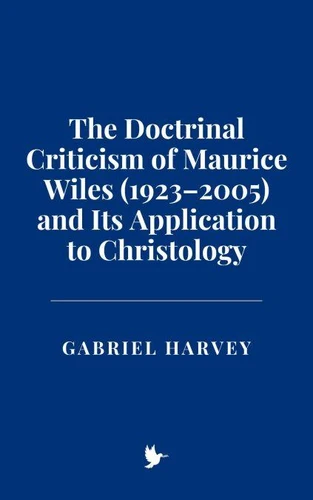
This book provides a comprehensive exploration of Maurice Wiles' theological contributions, particularly his Christology, and its lasting impact on contemporary Christian thought. Wiles' work challenges traditional theological frameworks by emphasizing the historical, relational, and ethical dimensions of Christ's life and mission. His critique of metaphysical abstraction, particularly in relation to the doctrine of the Incarnation, offers a transformative rethinking of Christ's role in salvation, highlighting the importance of divine solidarity with humanity and the ethical implications of the gospel.
Wiles' focus on the relational nature of the Trinity and the ethical demands of the Kingdom of God challenges Christians to engage actively with the world, prioritizing justice, peace, and reconciliation. Through an analysis of Wiles' contributions, the book explores his critique of classical Christology, the influence of historical criticism on his thinking, and his approach to ecclesiology and interfaith dialogue.
Wiles' rejection of traditional metaphysical approaches to God and Christ allows for a more accessible and socially engaged theology, offering a framework for addressing the moral challenges of the modern world. His work also engages with the intellectual currents of modernity and postmodernity, providing a response to secularism, religious pluralism, and the role of the Church in a fragmented world.
This book examines the ongoing relevance of Wiles' theology in areas such as Christian ethics, ecumenism, and contemporary discussions of salvation, offering a Christology that is deeply rooted in historical experience and ethical action. It underscores Wiles' influence on theologians engaged in the quest for a theology that is both intellectually rigorous and socially transformative, providing a foundation for Christian witness in a secular and pluralistic age.
This book provides a comprehensive exploration of Maurice Wiles' theological contributions, particularly his Christology, and its lasting impact on contemporary Christian thought. Wiles' work challenges traditional theological frameworks by emphasizing the historical, relational, and ethical dimensions of Christ's life and mission. His critique of metaphysical abstraction, particularly in relation to the doctrine of the Incarnation, offers a transformative rethinking of Christ's role in salvation, highlighting the importance of divine solidarity with humanity and the ethical implications of the gospel.
Wiles' focus on the relational nature of the Trinity and the ethical demands of the Kingdom of God challenges Christians to engage actively with the world, prioritizing justice, peace, and reconciliation. Through an analysis of Wiles' contributions, the book explores his critique of classical Christology, the influence of historical criticism on his thinking, and his approach to ecclesiology and interfaith dialogue.
Wiles' rejection of traditional metaphysical approaches to God and Christ allows for a more accessible and socially engaged theology, offering a framework for addressing the moral challenges of the modern world. His work also engages with the intellectual currents of modernity and postmodernity, providing a response to secularism, religious pluralism, and the role of the Church in a fragmented world.
This book examines the ongoing relevance of Wiles' theology in areas such as Christian ethics, ecumenism, and contemporary discussions of salvation, offering a Christology that is deeply rooted in historical experience and ethical action. It underscores Wiles' influence on theologians engaged in the quest for a theology that is both intellectually rigorous and socially transformative, providing a foundation for Christian witness in a secular and pluralistic age.


 , qui est-ce ?