SOLDES
Jusqu'à -70% sur une sélection d'articles*

Nouveauté
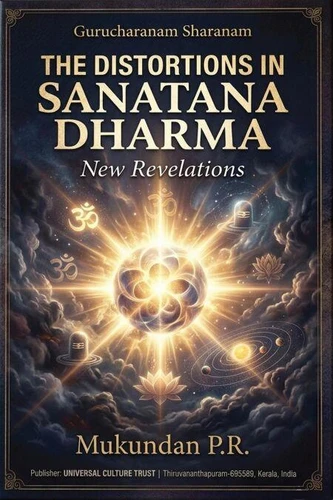
The Distortions in Sanatana Dharma
Par :Formats :
Disponible dans votre compte client Decitre ou Furet du Nord dès validation de votre commande. Le format ePub est :
- Compatible avec une lecture sur My Vivlio (smartphone, tablette, ordinateur)
- Compatible avec une lecture sur liseuses Vivlio
- Pour les liseuses autres que Vivlio, vous devez utiliser le logiciel Adobe Digital Edition. Non compatible avec la lecture sur les liseuses Kindle, Remarkable et Sony
 , qui est-ce ?
Notre partenaire de plateforme de lecture numérique où vous retrouverez l'ensemble de vos ebooks gratuitement
Pour en savoir plus sur nos ebooks, consultez notre aide en ligne ici
C'est si simple ! Lisez votre ebook avec l'app Vivlio sur votre tablette, mobile ou ordinateur :

- FormatePub
- ISBN8233738166
- EAN9798233738166
- Date de parution17/06/2026
- Protection num.pas de protection
- Infos supplémentairesepub
- ÉditeurLinda Balsamo
Résumé
This groundbreaking work delves into the esoteric layers of traditional knowledge to uncover critical distortions within the practice and understanding of Sanatana Dharma. Mukundan P. R. presents profound Revelations that seek to restore the lost purity of these ancient teachings, clearing a path of clarity for the seeker. Building upon a lineage of wisdom, this text exposes the subtle errors that have calcified into tradition, offering a corrective vision that is both intellectually rigorous and spiritually transformative.
It is an essential guide for navigating the complex spiritual landscape of the modern era. The question of the true foundation of Sanatana Dharma remains one of the least explored, most significant issues in Hindu religious history. Contemporary Hinduism is generally understood through the framework of the Trimurti-Brahma, Vishnu, and Shiva-who are regarded as the principal manifestations of creation, preservation, and dissolution.
However, a careful examination of Vedic literature, the Upanishads, and ancient cosmological concepts reveals an alternative paradigm centered on Manu, the primordial progenitor of humanity and the administrator of cosmic cycles known as Manvantaras. This book investigates whether the original basis of Sanatana Dharma was founded upon the concept of Manu-Purusha rather than the later Trimurti system.
Drawing upon references from the Rigveda, Chandogya Upanishad, Brihadaranayaka Upanishad, Vishnu Purana, Bhagavata Purana, and the teachings of Navajyoti Sri Karunakara Guru, the book argues that Manu occupied a central position in ancient spiritual thought and that the later elevation of the Trimurti arose from sectarian developments during the Puranic period. The book further examines the distinction between Guru-centric monotheism and priest-centric ritualism, highlighting the role of epochal Gurus in preserving Sanatana Dharma across different ages.
It proposes that the recovery of Manu Parampara offers a framework for understanding the original universal and monotheistic foundations of Hindu spirituality. The religious traditions collectively known as Hinduism encompass a vast diversity of beliefs, rituals, philosophies, and theological interpretations. Despite this diversity, one concept has become almost universally accepted within popular Hindu understanding: the doctrine of the Trimurti, consisting of Brahma, Vishnu, and Shiva.
According to conventional belief, Brahma creates the universe, Vishnu sustains it, and Shiva dissolves it. Yet a fundamental question arises: Is the Trimurti doctrine truly the original basis of Sanatana Dharma? Or does the older scriptural tradition point toward a different understanding of creation and cosmic governance?The Vedas and Upanishads present a worldview that differs significantly from later sectarian traditions.
Instead of emphasizing three creator deities, they repeatedly speak of a singular Cosmic Being-the Purusha-from whom all existence emerges. Alongside this concept appears the figure of Manu, described as the progenitor of humanity and the organizer of cosmic time. This book explores the hypothesis that Manu, identified with the Vedic Purusha tradition, represents the original foundation of Sanatana Dharma and that the Trimurti framework developed later through sectarian reinterpretations.
It further examines how Guru-centered monotheism became gradually overshadowed by deity-centered ritualism during the Puranic era.
It is an essential guide for navigating the complex spiritual landscape of the modern era. The question of the true foundation of Sanatana Dharma remains one of the least explored, most significant issues in Hindu religious history. Contemporary Hinduism is generally understood through the framework of the Trimurti-Brahma, Vishnu, and Shiva-who are regarded as the principal manifestations of creation, preservation, and dissolution.
However, a careful examination of Vedic literature, the Upanishads, and ancient cosmological concepts reveals an alternative paradigm centered on Manu, the primordial progenitor of humanity and the administrator of cosmic cycles known as Manvantaras. This book investigates whether the original basis of Sanatana Dharma was founded upon the concept of Manu-Purusha rather than the later Trimurti system.
Drawing upon references from the Rigveda, Chandogya Upanishad, Brihadaranayaka Upanishad, Vishnu Purana, Bhagavata Purana, and the teachings of Navajyoti Sri Karunakara Guru, the book argues that Manu occupied a central position in ancient spiritual thought and that the later elevation of the Trimurti arose from sectarian developments during the Puranic period. The book further examines the distinction between Guru-centric monotheism and priest-centric ritualism, highlighting the role of epochal Gurus in preserving Sanatana Dharma across different ages.
It proposes that the recovery of Manu Parampara offers a framework for understanding the original universal and monotheistic foundations of Hindu spirituality. The religious traditions collectively known as Hinduism encompass a vast diversity of beliefs, rituals, philosophies, and theological interpretations. Despite this diversity, one concept has become almost universally accepted within popular Hindu understanding: the doctrine of the Trimurti, consisting of Brahma, Vishnu, and Shiva.
According to conventional belief, Brahma creates the universe, Vishnu sustains it, and Shiva dissolves it. Yet a fundamental question arises: Is the Trimurti doctrine truly the original basis of Sanatana Dharma? Or does the older scriptural tradition point toward a different understanding of creation and cosmic governance?The Vedas and Upanishads present a worldview that differs significantly from later sectarian traditions.
Instead of emphasizing three creator deities, they repeatedly speak of a singular Cosmic Being-the Purusha-from whom all existence emerges. Alongside this concept appears the figure of Manu, described as the progenitor of humanity and the organizer of cosmic time. This book explores the hypothesis that Manu, identified with the Vedic Purusha tradition, represents the original foundation of Sanatana Dharma and that the Trimurti framework developed later through sectarian reinterpretations.
It further examines how Guru-centered monotheism became gradually overshadowed by deity-centered ritualism during the Puranic era.