
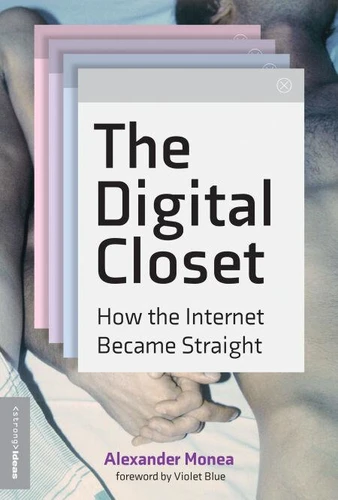
The Digital Closet /anglais
Par :Formats :
Disponible dans votre compte client Decitre ou Furet du Nord dès validation de votre commande. Le format ePub protégé est :
- Compatible avec une lecture sur My Vivlio (smartphone, tablette, ordinateur)
- Compatible avec une lecture sur liseuses Vivlio
- Pour les liseuses autres que Vivlio, vous devez utiliser le logiciel Adobe Digital Edition. Non compatible avec la lecture sur les liseuses Kindle, Remarkable et Sony
- Non compatible avec un achat hors France métropolitaine
 , qui est-ce ?
Notre partenaire de plateforme de lecture numérique où vous retrouverez l'ensemble de vos ebooks gratuitement
Pour en savoir plus sur nos ebooks, consultez notre aide en ligne ici
C'est si simple ! Lisez votre ebook avec l'app Vivlio sur votre tablette, mobile ou ordinateur :

- Nombre de pages280
- FormatePub
- ISBN978-0-262-36912-1
- EAN9780262369121
- Date de parution12/04/2022
- Protection num.Adobe DRM
- Taille891 Ko
- Infos supplémentairesepub
- ÉditeurThe MIT Press
Résumé
An exploration of how heteronormative bias is deeply embedded in the internet, hidden in algorithms, keywords, content moderation, and more. A Next Big Idea Club nominee. In The Digital Closet, Alexander Monea argues provocatively that the internet became straight by suppressing everything that is not, forcing LGBTQIA+ content into increasingly narrow channels-rendering it invisible through opaque algorithms, automated and human content moderation, warped keywords, and other strategies of digital overreach.
Monea explains how the United States' thirty-year "war on porn" has brought about the over-regulation of sexual content, which, in turn, has resulted in the censorship of much nonpornographic content-including material on sex education and LGBTQIA+ activism. In this wide-ranging, enlightening account, Monea examines the cultural, technological, and political conditions that put LGBTQIA+ content into the closet.
Monea looks at the anti-porn activism of the alt-right, Christian conservatives, and anti-porn feminists, who became strange bedfellows in the politics of pornography; investigates the coders, code, and moderators whose work serves to reify heteronormativity; and explores the collateral damage in the ongoing war on porn-the censorship of LGBTQ+ community resources, sex education materials, art, literature, and other content that engages with sexuality but would rarely be categorized as pornography by today's community standards.
Finally, he examines the internet architectures responsible for the heteronormalization of porn: Google Safe Search and the data structures of tube sites and other porn platforms. Monea reveals the porn industry's deepest, darkest secret: porn is boring. Mainstream porn is stuck in a heteronormative filter bubble, limited to the same heteronormative tropes, tagged by the same heteronormative keywords.
This heteronormativity is mirrored by the algorithms meant to filter pornographic content, increasingly filtering out all LGBTQIA+ content. Everyone suffers from this forced heteronormativity of the internet-suffering, Monea suggests, that could be alleviated by queering straightness and introducing feminism to dissipate the misogyny.
Monea explains how the United States' thirty-year "war on porn" has brought about the over-regulation of sexual content, which, in turn, has resulted in the censorship of much nonpornographic content-including material on sex education and LGBTQIA+ activism. In this wide-ranging, enlightening account, Monea examines the cultural, technological, and political conditions that put LGBTQIA+ content into the closet.
Monea looks at the anti-porn activism of the alt-right, Christian conservatives, and anti-porn feminists, who became strange bedfellows in the politics of pornography; investigates the coders, code, and moderators whose work serves to reify heteronormativity; and explores the collateral damage in the ongoing war on porn-the censorship of LGBTQ+ community resources, sex education materials, art, literature, and other content that engages with sexuality but would rarely be categorized as pornography by today's community standards.
Finally, he examines the internet architectures responsible for the heteronormalization of porn: Google Safe Search and the data structures of tube sites and other porn platforms. Monea reveals the porn industry's deepest, darkest secret: porn is boring. Mainstream porn is stuck in a heteronormative filter bubble, limited to the same heteronormative tropes, tagged by the same heteronormative keywords.
This heteronormativity is mirrored by the algorithms meant to filter pornographic content, increasingly filtering out all LGBTQIA+ content. Everyone suffers from this forced heteronormativity of the internet-suffering, Monea suggests, that could be alleviated by queering straightness and introducing feminism to dissipate the misogyny.