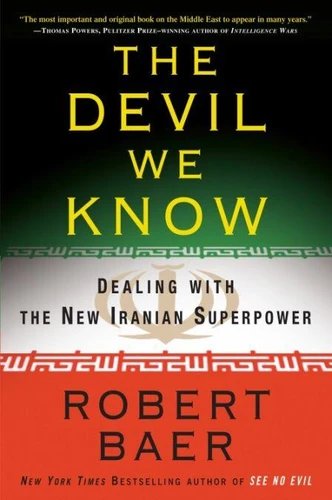
NEW YORK TIMES BESTSELLER . A frighteningly prescient look at Iran's unchecked growth as a hidden superpower, and the threat the nation will soon pose to the United States-and the world. "The most important book on the Middle East to appear in many years"-Thomas Powers, Pulitzer Prize-winning author of Intelligence WarsAs ex-CIA operative Robert Baer masterfully shows in The Devil We Know, Iran has maneuvered itself into the elite superpower ranks by exploiting Americans' false perceptions of what Iran is-by letting us believe it is a country run by scowling religious fanatics, too preoccupied with theocratic jostling and terrorist agendas to strengthen its political and economic foundations.
The reality is much more frightening. Baer mixes on-the-ground sleuthing and interviews with key players to demonstrate that Iran, far from being a wild-eyed rogue state, is a rational actor-one skilled in the game of nations and ruthlessly effective at thwarting Western colonialism. For U. S. policy makers, the choices have narrowed: either cede the world's most important energy corridors to a nation that can match us militarily with its asymmetric capabilities (which include the use of suicide bombers)-or deal with the devil we know.
The alternative-to continue goading Iran into establishing hegemony over the Muslim world-is too chilling to contemplate.
NEW YORK TIMES BESTSELLER . A frighteningly prescient look at Iran's unchecked growth as a hidden superpower, and the threat the nation will soon pose to the United States-and the world. "The most important book on the Middle East to appear in many years"-Thomas Powers, Pulitzer Prize-winning author of Intelligence WarsAs ex-CIA operative Robert Baer masterfully shows in The Devil We Know, Iran has maneuvered itself into the elite superpower ranks by exploiting Americans' false perceptions of what Iran is-by letting us believe it is a country run by scowling religious fanatics, too preoccupied with theocratic jostling and terrorist agendas to strengthen its political and economic foundations.
The reality is much more frightening. Baer mixes on-the-ground sleuthing and interviews with key players to demonstrate that Iran, far from being a wild-eyed rogue state, is a rational actor-one skilled in the game of nations and ruthlessly effective at thwarting Western colonialism. For U. S. policy makers, the choices have narrowed: either cede the world's most important energy corridors to a nation that can match us militarily with its asymmetric capabilities (which include the use of suicide bombers)-or deal with the devil we know.
The alternative-to continue goading Iran into establishing hegemony over the Muslim world-is too chilling to contemplate.

 , qui est-ce ?