SOLDES
Jusqu'à -70% sur une sélection d'articles*

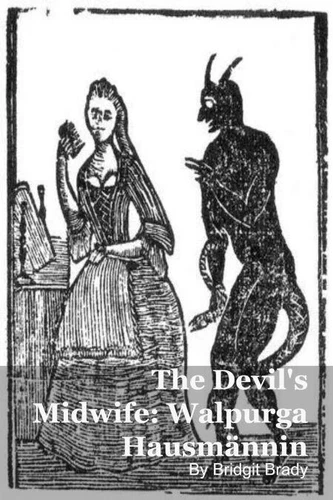
The Devil's Midwife: Walpurga Hausmännin
Par :Formats :
Disponible dans votre compte client Decitre ou Furet du Nord dès validation de votre commande. Le format ePub est :
- Compatible avec une lecture sur My Vivlio (smartphone, tablette, ordinateur)
- Compatible avec une lecture sur liseuses Vivlio
- Pour les liseuses autres que Vivlio, vous devez utiliser le logiciel Adobe Digital Edition. Non compatible avec la lecture sur les liseuses Kindle, Remarkable et Sony
 , qui est-ce ?
Notre partenaire de plateforme de lecture numérique où vous retrouverez l'ensemble de vos ebooks gratuitement
Pour en savoir plus sur nos ebooks, consultez notre aide en ligne ici
C'est si simple ! Lisez votre ebook avec l'app Vivlio sur votre tablette, mobile ou ordinateur :

- FormatePub
- ISBN8232975647
- EAN9798232975647
- Date de parution12/12/2025
- Protection num.pas de protection
- Infos supplémentairesepub
- ÉditeurDraft2Digital
Résumé
The Devil's Midwife: Walpurga HausmänninOn September 20, 1587, an elderly midwife named Walpurga Hausmännin was burned at the stake in Dillingen an der Donau, accused of murdering over forty infants through demonic means. Her coerced confession-extracted through systematic torture-described making a pact with a demon named Federlin, receiving a "Devil's salve" to kill babies, flying to sabbats on a pitchfork, and sucking children's blood "like a vampire." Her case became one of the most influential witch trials in European history, establishing a template that would shape hundreds of subsequent prosecutions.
The Devil's Midwife reconstructs Hausmännin's prosecution to reveal the complex architecture of injustice that enabled the European witch-hunts. Through her case, we see how legitimate legal procedures, sincere theological beliefs, and genuine social anxieties combined to produce systematic persecution that claimed approximately 50, 000-60, 000 lives-75-80% of them women. The book examines how torture produces false confessions, how information networks spread persecution templates, why professional women like midwives were particularly vulnerable, and how procedural legitimacy can mask profound injustice.
Drawing on trial records, contemporary chronicles, and modern scholarship, the book traces how one elderly woman's coerced confession became a standardized script replicated across territories and decades. It analyzes the legal mechanisms that enabled prosecution, the theological frameworks that justified it, the social functions it served, and the gendered violence it enacted. Finally, it explores how witch-hunting eventually declined, what lessons were learned and forgotten, and why the patterns that killed Hausmännin continue recurring in different forms-from twentieth-century show trials to contemporary moral panics.
Four centuries after her death, Hausmännin's case remains urgently relevant, warning that systematic persecution emerges not from individual evil but from institutional structures, sincere convictions, and social systems that enable injustice while appearing legitimate.
The Devil's Midwife reconstructs Hausmännin's prosecution to reveal the complex architecture of injustice that enabled the European witch-hunts. Through her case, we see how legitimate legal procedures, sincere theological beliefs, and genuine social anxieties combined to produce systematic persecution that claimed approximately 50, 000-60, 000 lives-75-80% of them women. The book examines how torture produces false confessions, how information networks spread persecution templates, why professional women like midwives were particularly vulnerable, and how procedural legitimacy can mask profound injustice.
Drawing on trial records, contemporary chronicles, and modern scholarship, the book traces how one elderly woman's coerced confession became a standardized script replicated across territories and decades. It analyzes the legal mechanisms that enabled prosecution, the theological frameworks that justified it, the social functions it served, and the gendered violence it enacted. Finally, it explores how witch-hunting eventually declined, what lessons were learned and forgotten, and why the patterns that killed Hausmännin continue recurring in different forms-from twentieth-century show trials to contemporary moral panics.
Four centuries after her death, Hausmännin's case remains urgently relevant, warning that systematic persecution emerges not from individual evil but from institutional structures, sincere convictions, and social systems that enable injustice while appearing legitimate.