


OFFRE LISEUSES
Une liseuse achetée = une housse offerte* jusqu'au 21 juin
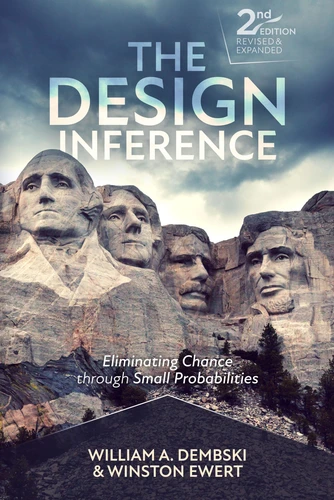
The Design Inference
Par : ,Formats :
Disponible dans votre compte client Decitre ou Furet du Nord dès validation de votre commande. Le format ePub est :
- Compatible avec une lecture sur My Vivlio (smartphone, tablette, ordinateur)
- Compatible avec une lecture sur liseuses Vivlio
- Pour les liseuses autres que Vivlio, vous devez utiliser le logiciel Adobe Digital Edition. Non compatible avec la lecture sur les liseuses Kindle, Remarkable et Sony
, qui est-ce ?Notre partenaire de plateforme de lecture numérique où vous retrouverez l'ensemble de vos ebooks gratuitement
Pour en savoir plus sur nos ebooks, consultez notre aide en ligne ici
- FormatePub
- ISBN978-1-63712-035-4
- EAN9781637120354
- Date de parution16/11/2023
- Protection num.pas de protection
- Infos supplémentairesepub
- ÉditeurDiscovery Institute Press
Résumé
A landmark of the intelligent design movement, The Design Inference revolutionized our understanding of how we detect intelligent causation. Originally published twenty-five years ago, it has now been revised and expanded into a second edition that greatly sharpens its exploration of design inferences. This new edition tackles questions about design left unanswered by David Hume and Charles Darwin, navigating the intricate nexus of chance, probability, and design, and thereby offering a novel lens for understanding the world.
Using modern concepts of probability and information, it exposes the inadequacy of undirected causes in scientific inquiry. It lays out how we infer design via events that are both improbable and specified. Amid controversial applications to biology, it makes a compelling case for intelligent design, challenging the prevalent neo-Darwinian evolutionary narrative. Dembski and Ewert have written a groundbreaking work that doesn't merely comment on contemporary scientific discourse but fundamentally transforms it.


