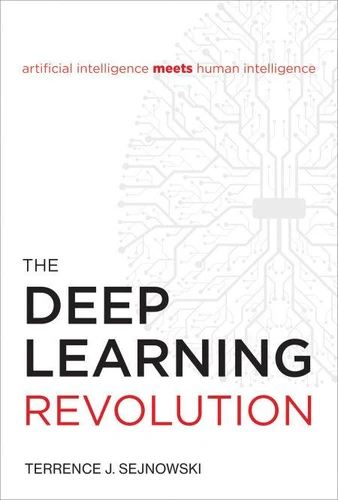
The Deep Learning Revolution
Par :Formats :
Disponible dans votre compte client Decitre ou Furet du Nord dès validation de votre commande. Le format ePub protégé est :
- Compatible avec une lecture sur My Vivlio (smartphone, tablette, ordinateur)
- Compatible avec une lecture sur liseuses Vivlio
- Pour les liseuses autres que Vivlio, vous devez utiliser le logiciel Adobe Digital Edition. Non compatible avec la lecture sur les liseuses Kindle, Remarkable et Sony
- Non compatible avec un achat hors France métropolitaine
 , qui est-ce ?
Notre partenaire de plateforme de lecture numérique où vous retrouverez l'ensemble de vos ebooks gratuitement
Pour en savoir plus sur nos ebooks, consultez notre aide en ligne ici
C'est si simple ! Lisez votre ebook avec l'app Vivlio sur votre tablette, mobile ou ordinateur :

- Nombre de pages352
- FormatePub
- ISBN978-0-262-34683-2
- EAN9780262346832
- Date de parution23/10/2018
- Protection num.Adobe DRM
- Taille8 Mo
- Infos supplémentairesepub
- ÉditeurThe MIT Press
Résumé
Explore how deep learning-from Google Translate and Siri to driverless cars-is changing our lives and transforming every sector of the economy."An important and timely book, written by a gifted scientist at the cutting edge of the AI revolution." -Nature The deep learning revolution has brought us driverless cars, the greatly improved Google Translate, fluent conversations with Siri and Alexa, and enormous profits from automated trading on the New York Stock Exchange.
Deep learning networks can play poker better than professional poker players and defeat a world champion at Go. In this book, Terry Sejnowski explains how deep learning went from being an arcane academic field to a disruptive technology in the information economy. Sejnowski played an important role in the founding of deep learning, as one of a small group of researchers in the 1980s who challenged the prevailing logic-and-symbol based version of AI.
The new version of AI Sejnowski and others developed, which became deep learning, is fueled instead by data. Deep networks learn from data in the same way that babies experience the world, starting with fresh eyes and gradually acquiring the skills needed to navigate novel environments. Learning algorithms extract information from raw data; information can be used to create knowledge; knowledge underlies understanding; understanding leads to wisdom.
Someday a driverless car will know the road better than you do and drive with more skill; a deep learning network will diagnose your illness; a personal cognitive assistant will augment your puny human brain. It took nature many millions of years to evolve human intelligence; AI is on a trajectory measured in decades. Sejnowski prepares us for a deep learning future.
Deep learning networks can play poker better than professional poker players and defeat a world champion at Go. In this book, Terry Sejnowski explains how deep learning went from being an arcane academic field to a disruptive technology in the information economy. Sejnowski played an important role in the founding of deep learning, as one of a small group of researchers in the 1980s who challenged the prevailing logic-and-symbol based version of AI.
The new version of AI Sejnowski and others developed, which became deep learning, is fueled instead by data. Deep networks learn from data in the same way that babies experience the world, starting with fresh eyes and gradually acquiring the skills needed to navigate novel environments. Learning algorithms extract information from raw data; information can be used to create knowledge; knowledge underlies understanding; understanding leads to wisdom.
Someday a driverless car will know the road better than you do and drive with more skill; a deep learning network will diagnose your illness; a personal cognitive assistant will augment your puny human brain. It took nature many millions of years to evolve human intelligence; AI is on a trajectory measured in decades. Sejnowski prepares us for a deep learning future.