SOLDES
Jusqu'à -70% sur une sélection d'articles*

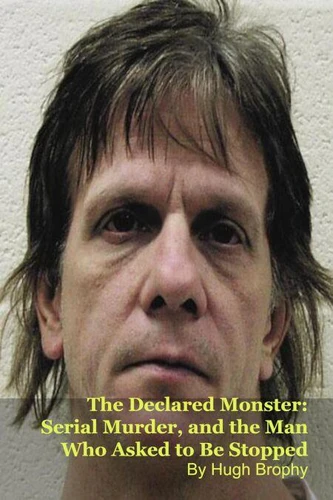
The Declared Monster: Serial Murder, and the Man Who Asked to Be Stopped
Par :Formats :
Disponible dans votre compte client Decitre ou Furet du Nord dès validation de votre commande. Le format ePub est :
- Compatible avec une lecture sur My Vivlio (smartphone, tablette, ordinateur)
- Compatible avec une lecture sur liseuses Vivlio
- Pour les liseuses autres que Vivlio, vous devez utiliser le logiciel Adobe Digital Edition. Non compatible avec la lecture sur les liseuses Kindle, Remarkable et Sony
 , qui est-ce ?
Notre partenaire de plateforme de lecture numérique où vous retrouverez l'ensemble de vos ebooks gratuitement
Pour en savoir plus sur nos ebooks, consultez notre aide en ligne ici
C'est si simple ! Lisez votre ebook avec l'app Vivlio sur votre tablette, mobile ou ordinateur :

- FormatePub
- ISBN8233944550
- EAN9798233944550
- Date de parution13/04/2026
- Protection num.pas de protection
- Infos supplémentairesepub
- ÉditeurLinda Balsamo
Résumé
The Declared Monster: Serial Murder, and the Man Who Asked to Be StoppedDavid Edward Maust killed five young men across three decades, two continents, and multiple American jurisdictions. He was not a hidden monster. He was a declared one, a man who petitioned the United States Army not to release him in 1977, who wrote a five-page letter to the Illinois Department of Corrections in 1999 begging to remain in supervised custody, who told every institutional system that encountered him exactly what he was and exactly what he would do if set free.
Each time, the system heard him. Each time, procedural constraint, legislative gaps, and the fragmented architecture of American criminal justice produced the same answer: the criteria are unmet, the mechanism does not exist, the gate must open. The Declared Monster is the definitive forensic and institutional account of the Maust case, tracing the developmental origins of his pathology, the forensic evolution of his methods across three decades, the catastrophic failures of civil commitment law, sentencing arithmetic, and inter-state registration frameworks, and the human cost borne by five young men and their families.
Drawing on clinical literature, legal analysis, and the case's extraordinary documentary record, this is a study in what happens when the systems built to protect us encounter a danger they were never designed to contain.
Each time, the system heard him. Each time, procedural constraint, legislative gaps, and the fragmented architecture of American criminal justice produced the same answer: the criteria are unmet, the mechanism does not exist, the gate must open. The Declared Monster is the definitive forensic and institutional account of the Maust case, tracing the developmental origins of his pathology, the forensic evolution of his methods across three decades, the catastrophic failures of civil commitment law, sentencing arithmetic, and inter-state registration frameworks, and the human cost borne by five young men and their families.
Drawing on clinical literature, legal analysis, and the case's extraordinary documentary record, this is a study in what happens when the systems built to protect us encounter a danger they were never designed to contain.