Nouveauté
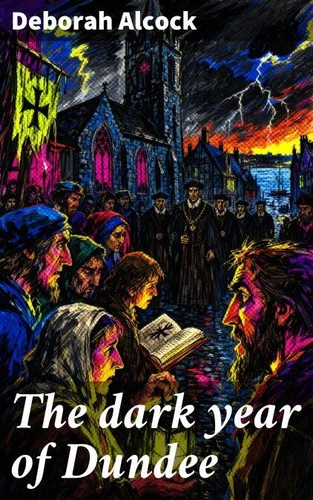
The dark year of Dundee. Historical Novel - A tale of the Scottish Reformation
Par :Formats :
Disponible dans votre compte client Decitre ou Furet du Nord dès validation de votre commande. Le format ePub est :
- Compatible avec une lecture sur My Vivlio (smartphone, tablette, ordinateur)
- Compatible avec une lecture sur liseuses Vivlio
- Pour les liseuses autres que Vivlio, vous devez utiliser le logiciel Adobe Digital Edition. Non compatible avec la lecture sur les liseuses Kindle, Remarkable et Sony
 , qui est-ce ?
Notre partenaire de plateforme de lecture numérique où vous retrouverez l'ensemble de vos ebooks gratuitement
Pour en savoir plus sur nos ebooks, consultez notre aide en ligne ici
C'est si simple ! Lisez votre ebook avec l'app Vivlio sur votre tablette, mobile ou ordinateur :

- Nombre de pages223
- FormatePub
- ISBN859-65--4791521-8
- EAN8596547915218
- Date de parution29/06/2026
- Protection num.Digital Watermarking
- Taille6 Mo
- Infos supplémentairesepub
- ÉditeurGOOD PRESS
Résumé
Deborah Alcock's The dark year of Dundee: A Tale of the Scottish Reformation is a historical narrative set amid the religious and civic upheavals that transformed sixteenth-century Scotland. Focusing on Dundee during a decisive moment of confessional conflict, the book blends dramatic incident with careful moral seriousness, presenting the Reformation not merely as political change but as a profound struggle of conscience, doctrine, and communal identity.
Alcock writes in a lucid, earnest, Victorian prose style, using fiction to illuminate historical crisis while remaining attentive to the theological convictions that animated the age. Alcock was a prolific nineteenth-century writer of Protestant historical fiction and devotional literature, deeply committed to making ecclesiastical history vivid for general readers. Her work consistently reflects an evangelical interest in martyrdom, scriptural faith, and the costs of religious fidelity.
These concerns clearly shape this novel, in which the Scottish Reformation becomes a vehicle for exploring courage, persecution, and providence. Her background as a writer for morally serious readers helps explain the book's didactic clarity and reverent treatment of reforming figures. This volume will especially reward readers interested in historical fiction, Reformation studies, and Victorian interpretations of Protestant history.
It is recommended as both an engaging story and a revealing cultural document: a work that dramatizes Scottish religious transformation while also showing how nineteenth-century evangelical authors understood the meaning of that past.
Alcock writes in a lucid, earnest, Victorian prose style, using fiction to illuminate historical crisis while remaining attentive to the theological convictions that animated the age. Alcock was a prolific nineteenth-century writer of Protestant historical fiction and devotional literature, deeply committed to making ecclesiastical history vivid for general readers. Her work consistently reflects an evangelical interest in martyrdom, scriptural faith, and the costs of religious fidelity.
These concerns clearly shape this novel, in which the Scottish Reformation becomes a vehicle for exploring courage, persecution, and providence. Her background as a writer for morally serious readers helps explain the book's didactic clarity and reverent treatment of reforming figures. This volume will especially reward readers interested in historical fiction, Reformation studies, and Victorian interpretations of Protestant history.
It is recommended as both an engaging story and a revealing cultural document: a work that dramatizes Scottish religious transformation while also showing how nineteenth-century evangelical authors understood the meaning of that past.
A propos de Deborah Alcock

0,99 €