SOLDES
Jusqu'à -70% sur une sélection d'articles*

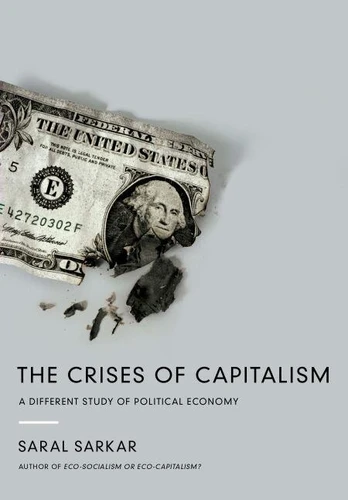
The Crises of Capitalism. A Different Study of Political Economy
Par : ,Formats :
Disponible dans votre compte client Decitre ou Furet du Nord dès validation de votre commande. Le format ePub protégé est :
- Compatible avec une lecture sur My Vivlio (smartphone, tablette, ordinateur)
- Compatible avec une lecture sur liseuses Vivlio
- Pour les liseuses autres que Vivlio, vous devez utiliser le logiciel Adobe Digital Edition. Non compatible avec la lecture sur les liseuses Kindle, Remarkable et Sony
- Non compatible avec un achat hors France métropolitaine
 , qui est-ce ?
Notre partenaire de plateforme de lecture numérique où vous retrouverez l'ensemble de vos ebooks gratuitement
Pour en savoir plus sur nos ebooks, consultez notre aide en ligne ici
C'est si simple ! Lisez votre ebook avec l'app Vivlio sur votre tablette, mobile ou ordinateur :

- Nombre de pages224
- FormatePub
- ISBN978-1-61902-125-9
- EAN9781619021259
- Date de parution01/09/2012
- Protection num.Adobe DRM
- Taille842 Ko
- Infos supplémentairesepub
- ÉditeurCounterpoint
Résumé
For nearly 300 years, capitalism propelled the world's most successful economies to new heights of development. But a spate of global environmental disasters and severe economic crises compels thinkers to question whether the system continues to function. Leveraging historical perspective, extensive research, and case studies, The Crises of Capitalism builds a compelling argument that challenges the most fundamental assumptions of prevailing economic theory.
Saral Sarkar exposes capitalism's flaws through the lens of ecosocialism, a philosophy that asserts that natural resources drive production and development. Keynes, Schumpeter, Marx, and Engles had no reason to believe that there would ever be a shortage of oil, minerals, water, or food-and that technological innovation could surmount any obstacle. But oil extraction has peaked, food is harder to come by, and the cost to maintain what natural resources remain has increased exponentially.
Capitalism requires constant innovation to create growth-but as Sarkar establishes, even computers wouldn't exist without copper, gold, and zinc. The Crises of Capitalism exists at the intersection of environmental awareness and economic theory. Sarkar challenges predominant explanations for catastrophic events like the 2008 global economic crisis, revises the classic paradigm of growth, and points to evidence of systemic economic failure.
In this provocative, revolutionary criticism, Sarkar suggests that like other long-abandoned economic theories, capitalism has reached its limits."This is an important book, and it is on the front edge of the thinking that has to come to bear on the real crisis the world is facing, of the impossible idea of growth forever and the economic model that is driving the planet into irreversible crises." -Doug Tompkins
Saral Sarkar exposes capitalism's flaws through the lens of ecosocialism, a philosophy that asserts that natural resources drive production and development. Keynes, Schumpeter, Marx, and Engles had no reason to believe that there would ever be a shortage of oil, minerals, water, or food-and that technological innovation could surmount any obstacle. But oil extraction has peaked, food is harder to come by, and the cost to maintain what natural resources remain has increased exponentially.
Capitalism requires constant innovation to create growth-but as Sarkar establishes, even computers wouldn't exist without copper, gold, and zinc. The Crises of Capitalism exists at the intersection of environmental awareness and economic theory. Sarkar challenges predominant explanations for catastrophic events like the 2008 global economic crisis, revises the classic paradigm of growth, and points to evidence of systemic economic failure.
In this provocative, revolutionary criticism, Sarkar suggests that like other long-abandoned economic theories, capitalism has reached its limits."This is an important book, and it is on the front edge of the thinking that has to come to bear on the real crisis the world is facing, of the impossible idea of growth forever and the economic model that is driving the planet into irreversible crises." -Doug Tompkins