SOLDES
Jusqu'à -70% sur une sélection d'articles*

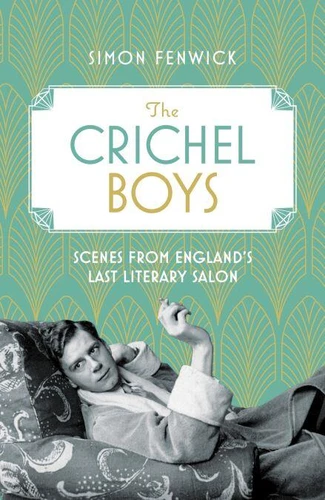
The Crichel Boys. Scenes from England's Last Literary Salon
Par :Formats :
Disponible dans votre compte client Decitre ou Furet du Nord dès validation de votre commande. Le format ePub protégé est :
- Compatible avec une lecture sur My Vivlio (smartphone, tablette, ordinateur)
- Compatible avec une lecture sur liseuses Vivlio
- Pour les liseuses autres que Vivlio, vous devez utiliser le logiciel Adobe Digital Edition. Non compatible avec la lecture sur les liseuses Kindle, Remarkable et Sony
- Non compatible avec un achat hors France métropolitaine
 , qui est-ce ?
Notre partenaire de plateforme de lecture numérique où vous retrouverez l'ensemble de vos ebooks gratuitement
Pour en savoir plus sur nos ebooks, consultez notre aide en ligne ici
C'est si simple ! Lisez votre ebook avec l'app Vivlio sur votre tablette, mobile ou ordinateur :

- Nombre de pages368
- FormatePub
- ISBN978-1-4721-3246-8
- EAN9781472132468
- Date de parution24/02/2021
- Protection num.Adobe DRM
- Infos supplémentairesepub
- ÉditeurConstable
Résumé
In 1945, Eddy Sackville-West, Desmond Shawe-Taylor and Eardley Knollys - writers for the New Statesman and a National Trust administrator - purchased Long Crichel House, an old rectory with no electricity and an inadequate water supply. In this improbable place, the last English literary salon began. Quieter and less formal than the famed London literary salons, Long Crichel became an idiosyncratic experiment in communal living.
Sackville-West, Shawe-Taylor and Knollys - later joined by the literary critic Raymond Mortimer - became members of one another's surrogate families and their companionship became a stimulus for writing, for them and their guests. Long Crichel's visitors' book reveals a Who's Who of the arts in post-war Britain - Nancy Mitford, Benjamin Britten, Laurie Lee, Cyril Connolly, Somerset Maugham, E. M. Forster, Cecil Beaton, Vita Sackville-West and Harold Nicolson - who were attracted by the good food, generous quantities of drink and excellent conversation.
For Frances Partridge and James Lees-Milne, two of the twentieth century's finest diarists, Long Crichel became a second home and their lives became bound up with the house. Yet there was to be more to the story of the house than what critics variously referred to as a group of 'hyphenated gentlemen-aesthetes' and a 'prose factory'. In later years the house and its inhabitants were to weather the aftershocks of the Crichel Down Affair, the Wolfenden Report and the AIDS crisis.
The story of Long Crichel is also part of the development of the National Trust and other conservation movements. Through the lens of Long Crichel, archivist and writer Simon Fenwick tells a wider story of the great upheaval that took place in the second half of the twentieth century. Intimate and revealing, he brings to life Long Crichel's golden, gossipy years and, in doing so, unveils a missing link in English literary and cultural history.
Sackville-West, Shawe-Taylor and Knollys - later joined by the literary critic Raymond Mortimer - became members of one another's surrogate families and their companionship became a stimulus for writing, for them and their guests. Long Crichel's visitors' book reveals a Who's Who of the arts in post-war Britain - Nancy Mitford, Benjamin Britten, Laurie Lee, Cyril Connolly, Somerset Maugham, E. M. Forster, Cecil Beaton, Vita Sackville-West and Harold Nicolson - who were attracted by the good food, generous quantities of drink and excellent conversation.
For Frances Partridge and James Lees-Milne, two of the twentieth century's finest diarists, Long Crichel became a second home and their lives became bound up with the house. Yet there was to be more to the story of the house than what critics variously referred to as a group of 'hyphenated gentlemen-aesthetes' and a 'prose factory'. In later years the house and its inhabitants were to weather the aftershocks of the Crichel Down Affair, the Wolfenden Report and the AIDS crisis.
The story of Long Crichel is also part of the development of the National Trust and other conservation movements. Through the lens of Long Crichel, archivist and writer Simon Fenwick tells a wider story of the great upheaval that took place in the second half of the twentieth century. Intimate and revealing, he brings to life Long Crichel's golden, gossipy years and, in doing so, unveils a missing link in English literary and cultural history.
A propos de Simon Fenwick
A Life of Erlund Hudson
E-book
7,49 €