
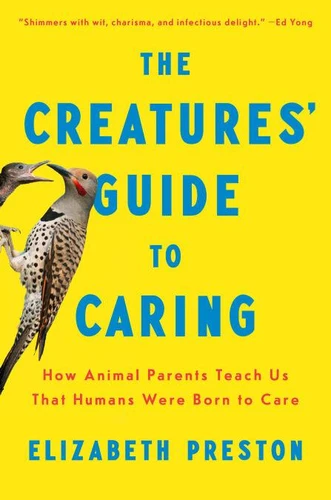
The Creatures' Guide to Caring. How Animal Parents Teach Us That Humans Were Born to Care
Par :Formats :
Disponible dans votre compte client Decitre ou Furet du Nord dès validation de votre commande. Le format ePub protégé est :
- Compatible avec une lecture sur My Vivlio (smartphone, tablette, ordinateur)
- Compatible avec une lecture sur liseuses Vivlio
- Pour les liseuses autres que Vivlio, vous devez utiliser le logiciel Adobe Digital Edition. Non compatible avec la lecture sur les liseuses Kindle, Remarkable et Sony
- Non compatible avec un achat hors France métropolitaine
 , qui est-ce ?
Notre partenaire de plateforme de lecture numérique où vous retrouverez l'ensemble de vos ebooks gratuitement
Pour en savoir plus sur nos ebooks, consultez notre aide en ligne ici
C'est si simple ! Lisez votre ebook avec l'app Vivlio sur votre tablette, mobile ou ordinateur :

- Nombre de pages416
- FormatePub
- ISBN978-0-593-65711-9
- EAN9780593657119
- Date de parution05/05/2026
- Protection num.Adobe DRM
- Taille14 Mo
- Infos supplémentairesepub
- ÉditeurViking
Résumé
A lively and revelatory journey through the evolution of caretaking on Earth, from animal parents to modern-day humans, making the case that caring for children and one another made us who we arePoison frog fathers carry tadpoles on their backs. Killer whale grandmothers hunt to feed their adult sons. Tropical birds incubate their friends' eggs. Spider moms let their hatchlings eat them alive. Around the world, animals from the exotic to the familiar go to astonishing lengths to keep their young alive.
Their biology, brains and behaviors show us what we have in common with other creatures, as well as what's unique about Homo sapiens. With warmth, humor, and occasional run-ins with bodily fluids, science journalist Elizabeth Preston leads a highly accessible tour of cutting-edge research into how and why we and other animals care for young. She discovers that humans evolved to raise our kids in cooperative groups, and that the tools we've inherited for caretaking aren't only for moms or parents in general-they're the basis for our human society.
Their biology, brains and behaviors show us what we have in common with other creatures, as well as what's unique about Homo sapiens. With warmth, humor, and occasional run-ins with bodily fluids, science journalist Elizabeth Preston leads a highly accessible tour of cutting-edge research into how and why we and other animals care for young. She discovers that humans evolved to raise our kids in cooperative groups, and that the tools we've inherited for caretaking aren't only for moms or parents in general-they're the basis for our human society.