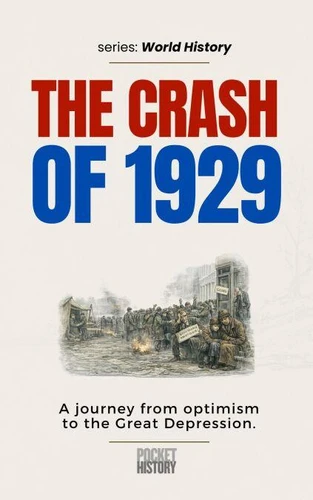
The Great Depression was the most devastating economic crisis of the twentieth century, reshaping governments, societies, and the global financial system. Triggered by the Wall Street Crash of October 1929, the collapse of stock prices exposed deep structural weaknesses in the American and international economies. What began as a financial panic quickly evolved into a worldwide depression marked by mass unemployment, bank failures, industrial decline, and social unrest.
This book explores the economic boom of the Roaring Twenties, the speculative bubble that inflated the stock market, and the dramatic events of Black Tuesday. It examines how fragile banking systems, overproduction, unequal wealth distribution, and flawed monetary policies contributed to a collapse that spread across Europe and beyond. The human consequences were profound: millions lost their jobs, farms were devastated by the Dust Bowl, and entire communities faced poverty on an unprecedented scale.
The narrative also analyzes the political responses to the crisis, especially Franklin D. Roosevelt's New Deal, which redefined the role of government in economic management. Banking reforms, public works programs, and regulatory institutions reshaped American capitalism. By understanding the causes, impact, and long-term consequences of the 1929 crisis, readers gain insight into how modern economic policy evolved-and why the lessons of the Great Depression remain relevant today.
The Great Depression was the most devastating economic crisis of the twentieth century, reshaping governments, societies, and the global financial system. Triggered by the Wall Street Crash of October 1929, the collapse of stock prices exposed deep structural weaknesses in the American and international economies. What began as a financial panic quickly evolved into a worldwide depression marked by mass unemployment, bank failures, industrial decline, and social unrest.
This book explores the economic boom of the Roaring Twenties, the speculative bubble that inflated the stock market, and the dramatic events of Black Tuesday. It examines how fragile banking systems, overproduction, unequal wealth distribution, and flawed monetary policies contributed to a collapse that spread across Europe and beyond. The human consequences were profound: millions lost their jobs, farms were devastated by the Dust Bowl, and entire communities faced poverty on an unprecedented scale.
The narrative also analyzes the political responses to the crisis, especially Franklin D. Roosevelt's New Deal, which redefined the role of government in economic management. Banking reforms, public works programs, and regulatory institutions reshaped American capitalism. By understanding the causes, impact, and long-term consequences of the 1929 crisis, readers gain insight into how modern economic policy evolved-and why the lessons of the Great Depression remain relevant today.


 , qui est-ce ?